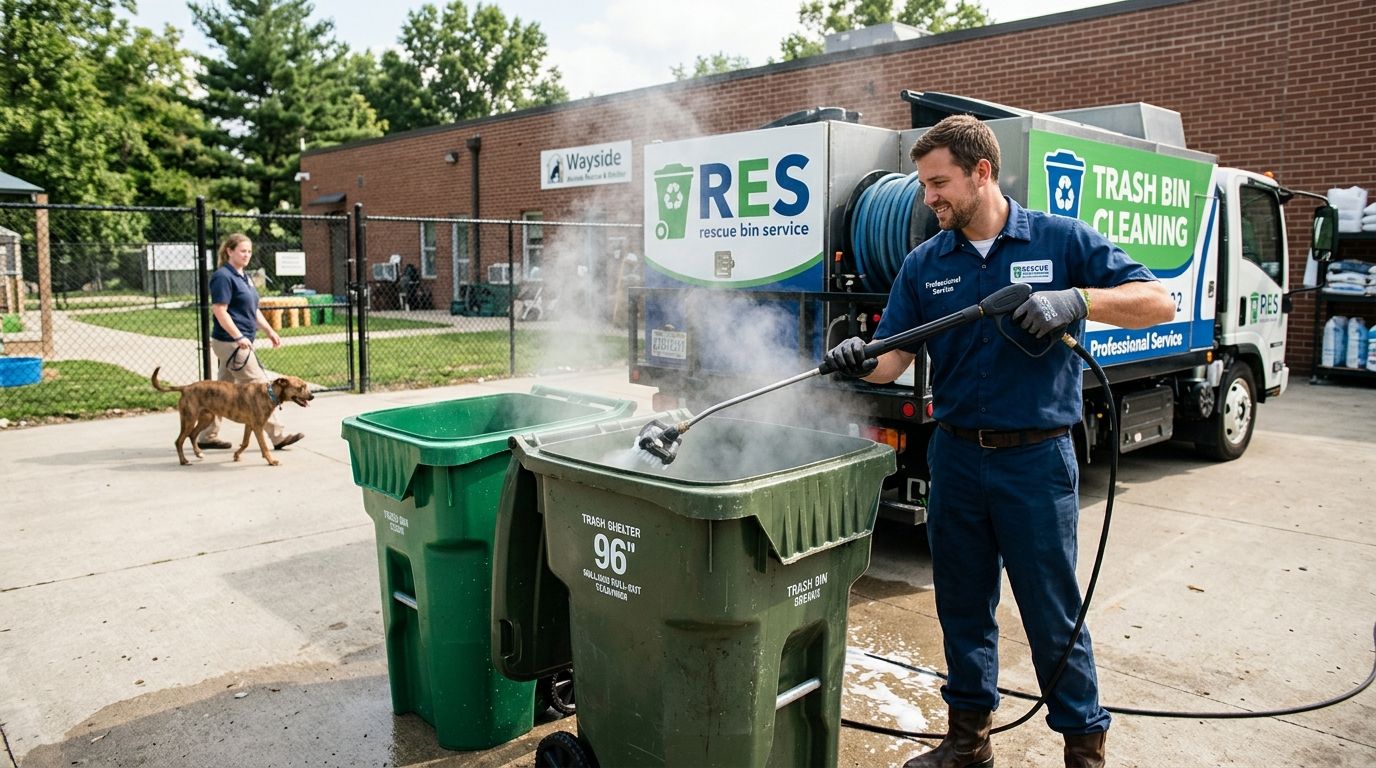
Animal shelters and rescues produce more trash bin odor, maggot risk, and biohazard concern per week than almost any other property type in Tulsa — daily kennel waste, soiled bedding, spoiled food, and euthanasia byproducts all sit in the same corral. Best overall for daily-intake shelters: Lemon Fresh Bins' monthly subscription. Best for shelters that also run onsite veterinary care: Lemon Fresh Bins' service for animal clinics and hospitals. Best for one-off prep before a health inspection or adoption event: a one-time deep clean. Best budget option for volunteer-run rescues: DIY pressure washing between professional visits.
- Lemon Fresh Bins' monthly subscription is the best trash bin cleaning service for animal shelters with daily intake and heavy maggot risk.
- Shelters running an onsite clinic need a service built around medical and surgical waste bins, not just general trash.
- A one-time deep clean works for inspection prep or a single adoption event but doesn't stop the odor cycle from restarting.
- DIY pressure washing is the cheapest option but leaves wastewater and bacteria near animal enclosures.
- 2026 health inspections in Tulsa shelters increasingly flag bin odor and pest activity as a compliance issue, not just a nuisance.
Why this matters for shelters and rescues
A municipal shelter or rescue doesn't run one trash can — it runs several bin corrals, and each one fills faster than a typical household because of daily kennel cleanout, spoiled donated food, and disposable bedding. That volume is exactly what attracts flies, and a female housefly can lay eggs on decomposing waste that hatch into maggots within about 24 hours. Bin odor at a shelter isn't just unpleasant for staff — it affects adopters walking the property and it shows up on state or county inspection checklists.
Lemon Fresh Bins runs a 5-step high-pressure sanitizing and deodorizing process built for exactly this kind of recurring, high-volume waste. In 2026, more Tulsa-area shelters are moving off one-off pressure washing and onto a recurring schedule because the maggot cycle restarts every time a bin sits dirty for more than a few days.
What counts as a shelter or rescue for bin cleaning purposes
This guide applies to municipal animal shelters, breed rescues, foster-based rescue networks, and low-cost spay/neuter clinics that share a waste stream with kennel operations. Many of these organizations operate as 501(c)(3) nonprofits, and the criteria below overlap heavily with what matters for any nonprofit organization managing a tight budget and a public-facing property.
What makes the best trash bin cleaning service for animal shelters
- Animal-safe sanitizing — kills bacteria and odor-causing residue without leaving chemical fumes near kennels
- Wastewater reclamation — no dirty runoff pooling next to animal enclosures or play yards
- Flexible scheduling — works around a shelter's daily trash pickup, not the other way around
- Multi-bin capacity — handles several bins or a shared dumpster corral in one visit
- Maggot and fly elimination — targets the exact source of infestation, not just surface smell
- Recurring cadence — matches the reality that shelter waste refills fast, unlike a typical household bin
At a glance
| Service | Best for | Standout feature | Key limitation |
|---|---|---|---|
| Lemon Fresh Bins monthly subscription | High-intake shelters with daily kennel waste | Recurring 5-step sanitize-and-deodorize cycle | Requires bin access on a set day each month |
| Lemon Fresh Bins for animal clinics | Shelters with an onsite veterinary or surgical wing | Handles medical-adjacent waste bins alongside general trash | May need a separate visit slot from general shelter bins |
| One-time deep clean | Pre-inspection or single adoption event prep | Fast turnaround before a specific date | Odor and maggots can return within days if not repeated |
| DIY pressure washing | Volunteer-run rescues on a tight budget | No recurring cost | Inconsistent results and runoff near animal areas |
1. Lemon Fresh Bins monthly subscription: best for high-intake animal shelters
A shelter that processes new intakes daily generates trash volume closer to a small restaurant than a household. The monthly subscription puts a recurring high-pressure sanitizing cycle on the calendar so bins never sit long enough for maggots to establish.
Lemon Fresh Bins subscription pros:
- Recurring service means odor and pest risk never gets a chance to build back up
- Same 5-step process every visit — wash, sanitize, deodorize, inspect, done
- Covers Tulsa and Owasso, so multi-location rescue networks in the metro can standardize on one vendor
Lemon Fresh Bins subscription cons:
- Commits the shelter to a recurring schedule even during slower intake months
- Staff or volunteers need to have bins accessible and emptied on the scheduled day
- Currently limited to the Tulsa service area, so out-of-metro rescue branches need a separate solution
Best for: shelters and rescues with daily or near-daily kennel waste. Verdict: Buy.
2. Lemon Fresh Bins for animal clinics: best for shelters with an onsite veterinary wing
A growing number of Tulsa-area rescues run a combined shelter-and-clinic model, with spay/neuter surgery happening on the same property as kennel operations. That setup produces two different waste streams that need different attention. The service built for veterinary clinics and animal hospitals is built around that exact combination.
Pros:
- Addresses bins near surgical and recovery areas separately from general kennel trash
- Same animal-safe sanitizing chemistry used across the standard subscription
- Reduces cross-contamination risk between medical waste bins and general trash corrals
Cons:
- Best treated as an add-on scheduling conversation rather than a single blanket visit
- Facilities without an onsite clinic don't need this tier — the standard subscription covers them
Best for: combined shelter-clinic operations. Verdict: Buy, if the property runs veterinary services onsite.
3. One-time deep clean: best for inspection prep or a single adoption event
Some rescues only need a bin reset ahead of a specific date — a county health inspection, a grand-opening adoption day, or a donor open house. A one-time deep clean resets bins to a clean baseline without committing to a recurring plan.
Pros:
- No ongoing commitment — book it once and you're done
- Same high-pressure sanitizing pass as the subscription tier
- Works well paired with general property cleanup before a public-facing event
Cons:
- Odor and maggot risk restarts on the same timeline as before — usually within days at a high-intake facility
- Doesn't solve the underlying cadence problem for shelters with daily waste volume
Best for: a single deadline, not a recurring waste problem. Verdict: Hold — fine as a one-off, not a long-term fix.
4. DIY pressure washing: best for volunteer-run rescues on a tight budget
Small foster-based rescues sometimes handle bin cleaning in-house with a garden hose and a rented pressure washer. It's the cheapest option on this list, but it comes with real tradeoffs for a facility housing live animals.
Pros:
- No recurring cost, which matters for all-volunteer rescue budgets
- Can be done on whatever schedule volunteers manage
- Works as a stopgap between professional visits
Cons:
- Runoff and wastewater often pool near kennels or play yards without reclamation equipment
- Consumer pressure washers can crack plastic bins if the pressure setting or nozzle distance is wrong
- Volunteer time is already stretched thin at most rescues, and this adds another recurring task
Best for: rescues with no budget for professional service and volunteers willing to learn proper technique. Verdict: Wait — use it as a stopgap, not a primary plan.
How we ranked these
Each option was weighed against the criteria above: sanitizing effectiveness, wastewater handling near animals, scheduling flexibility around shelter operations, and whether the approach solves a recurring problem or just a one-time reset. The subscription model wins on recurring effectiveness; the one-time and DIY options trade that off for lower cost or flexibility.
Which service should you choose?
If your shelter or rescue takes in animals daily, the Lemon Fresh Bins monthly subscription is the right call — it matches the waste volume to a recurring sanitizing cycle instead of letting bins reset the maggot clock every few weeks. If your facility also runs a veterinary or surgical wing, pair that subscription with the clinic-specific service. Reserve the one-time deep clean for a specific deadline, and treat DIY pressure washing as a bridge, not a permanent system.
Get shelter bins on a cleaning schedule
See Tulsa-area subscription plans built for daily waste volume.
FAQ
What's the best trash bin cleaning service for animal shelters in 2026?
A recurring monthly subscription is the best trash bin cleaning service for animal shelters in 2026 because daily kennel waste and food scraps refill bins fast enough that a one-time clean doesn't hold. Lemon Fresh Bins' 5-step sanitizing process is built for that daily-intake volume.
How often should an animal shelter get its trash bins cleaned?
Monthly is the standard cadence for shelters with daily intake, since waste volume and odor buildup mirror a small commercial kitchen more than a household. Lower-intake foster rescues may get by on a quarterly schedule.
Can bin cleaning services handle waste from an onsite veterinary clinic?
Yes, but it should be scheduled as a distinct service from general kennel trash bins, since surgical-adjacent waste streams need separate attention. Facilities with an onsite clinic should book both the standard subscription and the clinic-specific visit.
Is a one-time bin cleaning enough for a shelter, or do you need a subscription?
A one-time clean works for a single deadline like an inspection or adoption event, but it doesn't stop odor and maggots from returning within days at a high-intake facility. Shelters with daily waste need a recurring subscription to keep the cycle from restarting.
Do trash bin cleaning services work around a shelter's own trash pickup schedule?
Yes — scheduling is typically built around the property's existing pickup day so bins get sanitized right after they're emptied, not before. That timing matters more for shelters than households because bins refill faster.
Can DIY pressure washing replace a professional bin cleaning service?
DIY pressure washing can work as a stopgap for volunteer-run rescues on a tight budget, but it lacks wastewater reclamation and can crack plastic bins if pressure and nozzle distance aren't right. It's a bridge option, not a long-term replacement.
Does trash bin cleaning actually help control maggots and flies at a shelter?
Yes — fly eggs laid on decomposing waste can hatch into maggots within about 24 hours, so removing residue before that window closes is the most effective control point. A recurring sanitizing schedule interrupts that cycle before it starts.
What areas does Lemon Fresh Bins serve for shelter and rescue bin cleaning?
Lemon Fresh Bins currently services the Tulsa and Owasso metro area. Multi-location rescue networks with branches outside that footprint need to check coverage for each site separately.
One last thing
The detail most shelter managers miss: the corral itself, not just the bins, holds onto odor. A bin can come back spotless from a 2026 cleaning cycle and still smell within a week if the concrete pad or gravel underneath never gets addressed — that's a separate problem from the bin itself, but it's worth flagging to whoever handles facility maintenance.