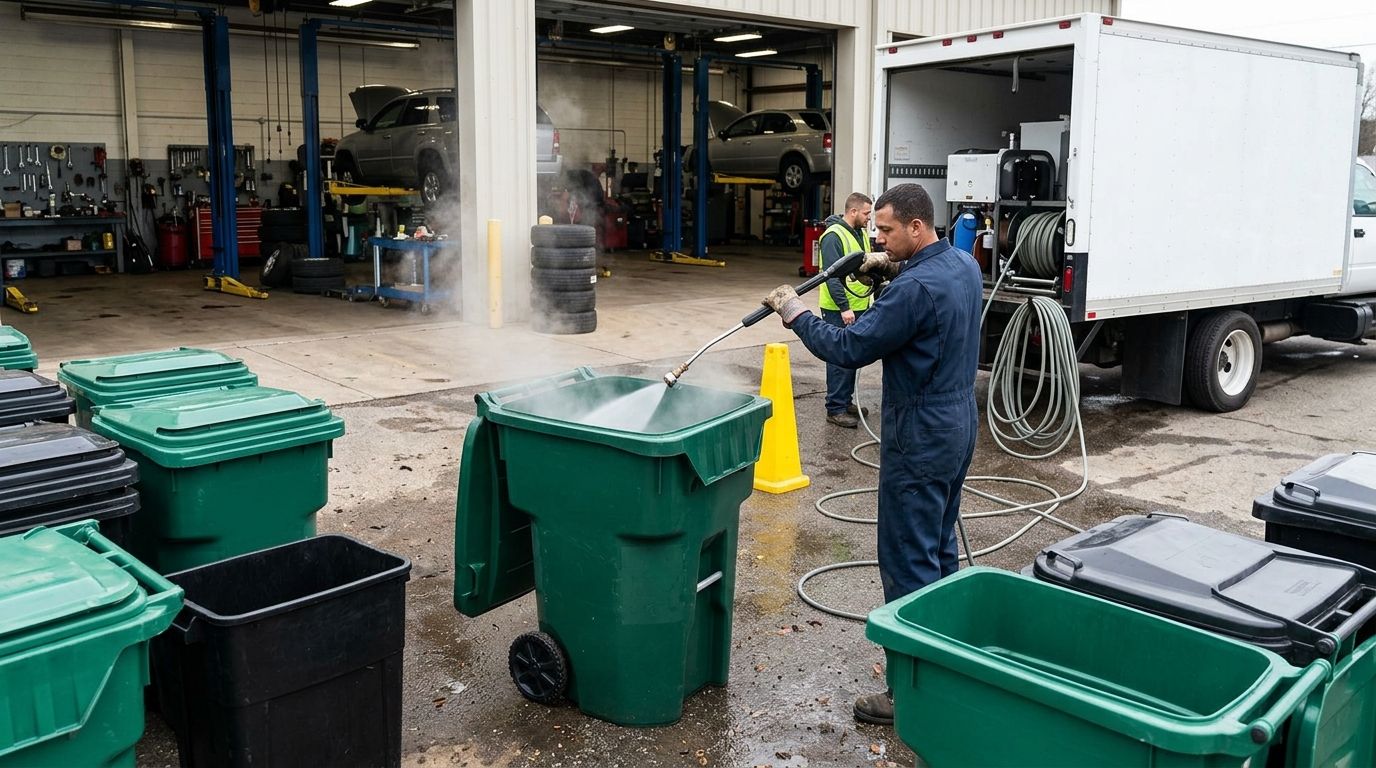
Best overall for Tulsa auto repair shops in 2026: Lemon Fresh Bins subscription cleaning, which degreases the shop floor bin and break room can on a set schedule. Best for pre-sale or pre-inspection prep: a single deep-clean visit. Best budget option: DIY pressure washing, if you already own a hot-water rig and the time to run it.
- Lemon Fresh Bins subscription cleaning is the best trash bin cleaning service for auto repair shops with recurring grease buildup.
- One-time deep cleans work for pre-sale prep, but odor and grease start rebuilding within weeks in a working shop.
- DIY pressure washing saves money, but consumer machines rarely hit the water temperature needed to cut baked-on oil.
- Shops with a shop floor bin, break room can, and dumpster corral need one service that covers all three, not just one.
Why this matters
An auto repair shop's trash cans don't smell like a regular kitchen can. Used shop rags, absorbent pads, degreaser residue, and break room food waste bake together in a plastic bin sitting in a Tulsa parking lot through a 100-degree July afternoon. That combination pulls flies fast, and it's usually the first thing a customer notices walking past the bay doors toward the lobby.
Lemon Fresh Bins built its process around cutting grease and neutralizing odor at the bin itself, not just spraying water at the outside of the can. For a shop running two or three bins across the property in 2026, that difference is the whole decision.
What makes the best trash bin cleaning service for auto repair shops
- Hot, high-pressure water that breaks down baked-on grease and oil, not a garden-hose rinse
- Wastewater capture, so runoff doesn't end up in the parking lot or a storm drain
- Deodorizing that holds up against diesel, rubber, and coolant smell, not a spray-on air freshener
- Scheduling that works around shop hours and trash pickup day, not a homeowner's Saturday
- Coverage for more than one bin type: shop floor bin, break room can, and any outdoor dumpster corral
- A crew that works around a technician's bay instead of through it
Auto repair shop trash bin cleaning options at a glance
| Option | Best For | Standout Feature | Key Limitation |
|---|---|---|---|
| Lemon Fresh Bins subscription cleaning | Recurring shop-floor and break room bins | Set schedule, hot-water degreasing, deodorizing every visit | Doesn't cover in-bay solvent recovery |
| One-time deep clean visit | Pre-sale or pre-inspection prep | Single scheduled visit, no ongoing commitment | Grease and odor return within weeks in summer heat |
| DIY pressure washing | Owner-operators with their own equipment | No added cost, done on your own time | Consumer washers rarely hit the temperature needed to cut baked-on grease |
| Recurring commercial cleaning schedule | Multi-bay shops with several bins on one property | One schedule covers every bin on site | Only pays off once a shop has more than one or two bins |
| Between-visit deodorizer treatments | Stretching time between professional cleanings | Cheap, fast, no scheduling needed | Masks odor, doesn't remove grease or bacteria |
1. Lemon Fresh Bins subscription cleaning: best for recurring shop and break room bins
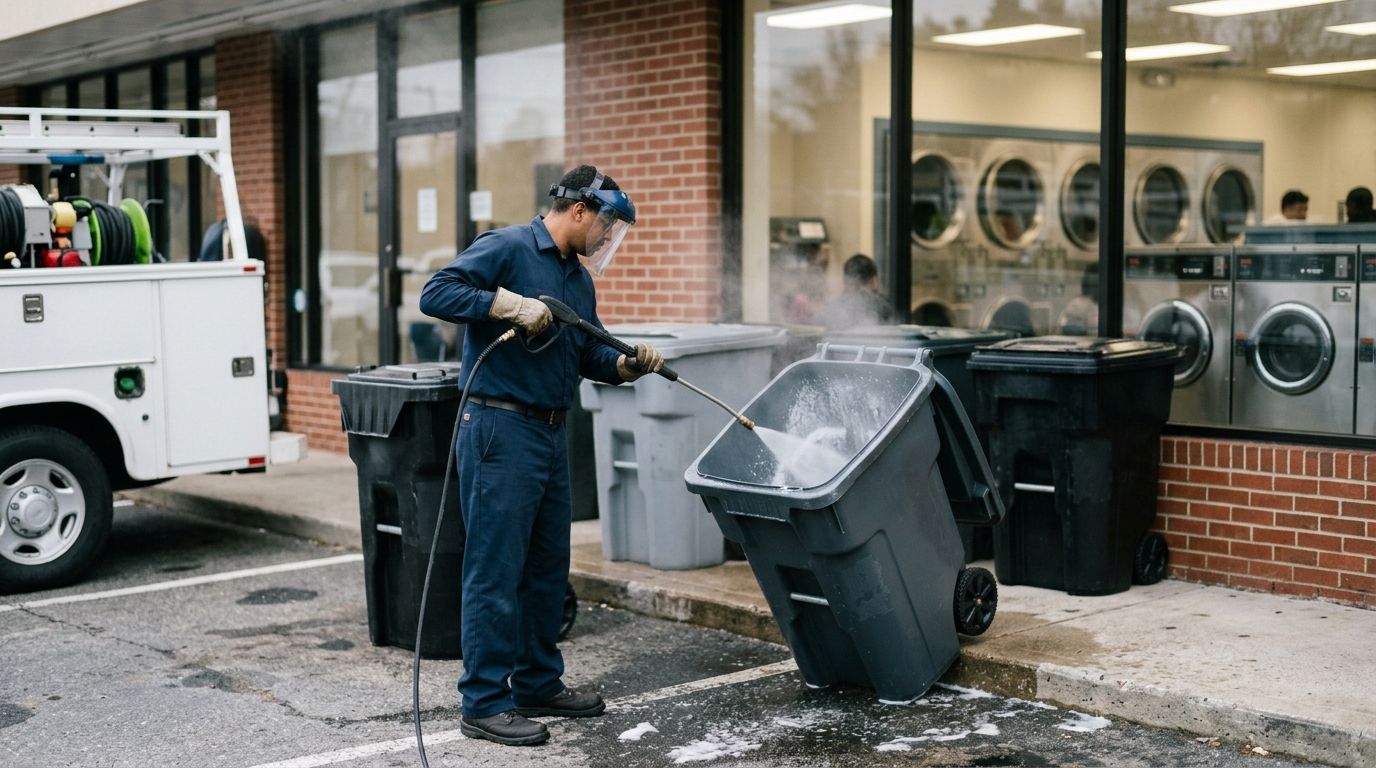
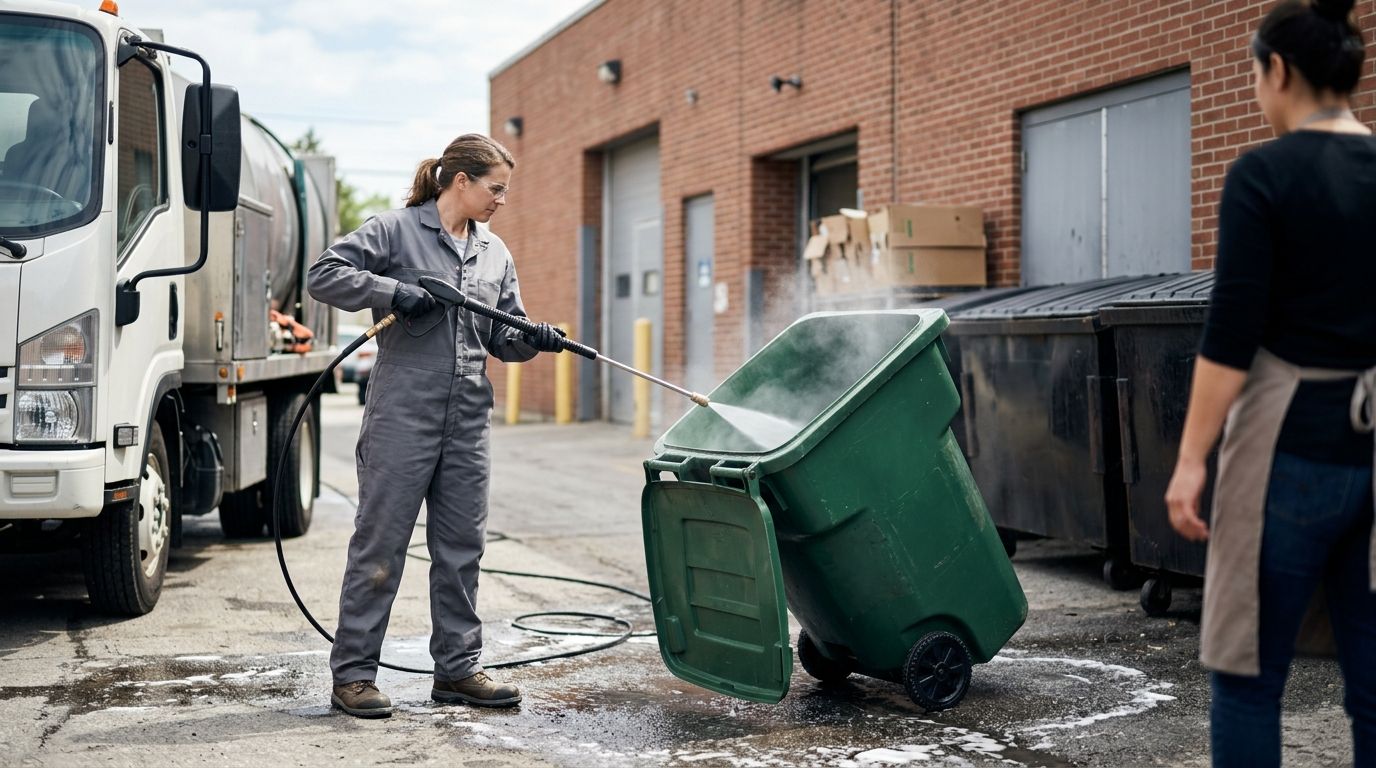
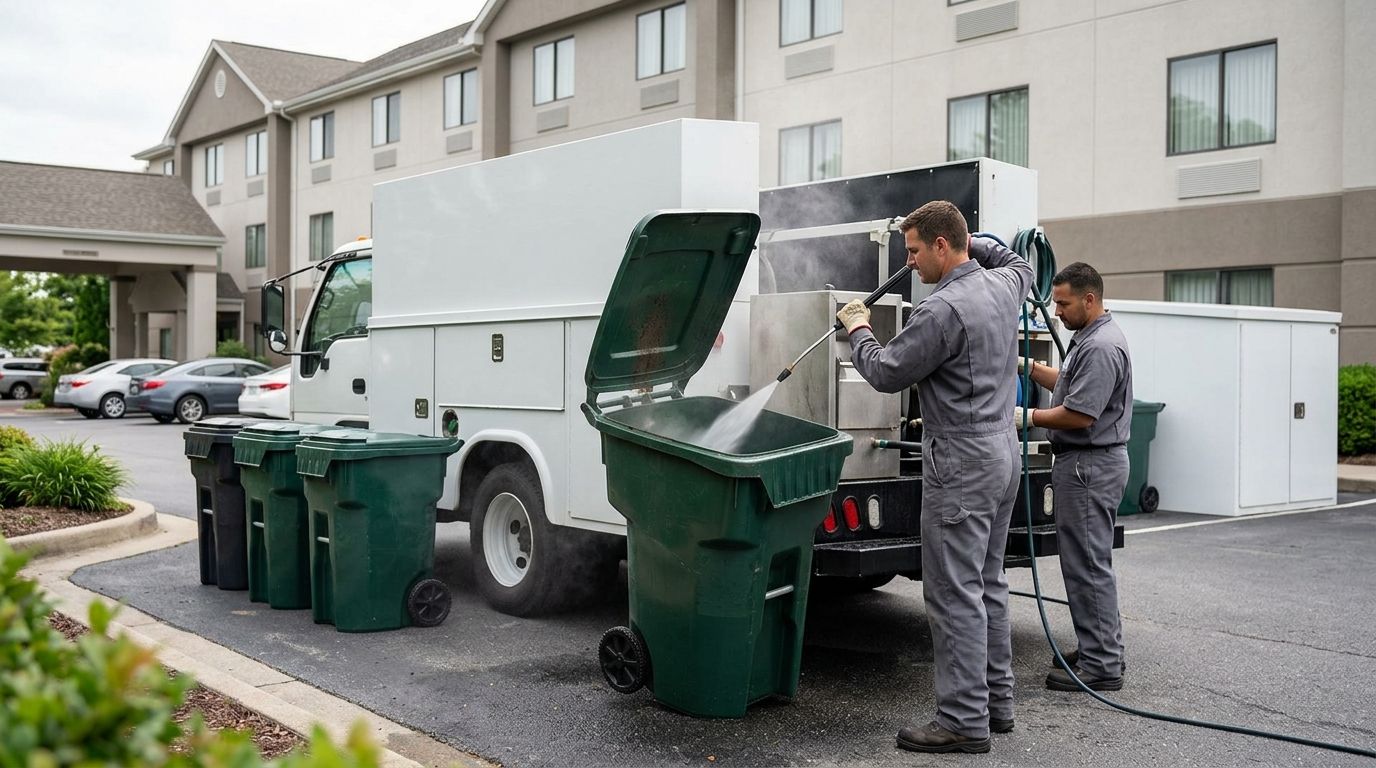
Lemon Fresh Bins runs a scheduled visit that pressure-washes, sanitizes, and deodorizes each bin on the property, including the shop floor can that catches oily rags and the break room bin that fills with food waste and coffee grounds. The crew works the route on a set day, so a shop with two or three bins gets all of them handled in one stop instead of booking separate services.
Lemon Fresh Bins subscription cleaning pros:
- Covers shop floor bins, break room cans, and outdoor corrals in one visit
- Recurring schedule means grease and odor never bake in for weeks at a time
- Deodorizing step targets diesel and rubber smell, not just synthetic fragrance
- Crew works around shop hours instead of interrupting a technician mid-repair
Lemon Fresh Bins subscription cleaning cons:
- Doesn't replace in-bay solvent recovery or hazardous waste disposal
- Best value shows up with multiple bins on one route; a single small can sees less benefit
Best for: shops with a shop floor bin, break room can, and outdoor dumpster corral that all need attention on the same visit. Verdict: Buy.
2. One-time deep clean visit: best for pre-sale or pre-inspection prep
A single scheduled visit strips built-up grease and odor out of a bin before a walkthrough, an insurance inspection, or a change of ownership. It's the same process as a subscription visit, just without the recurring commitment.
One-time deep clean pros:
- No ongoing schedule to manage
- Gets bins presentable fast before a specific date
- Pairs well with a broader property cleanup
One-time deep clean cons:
- Grease and odor start rebuilding almost immediately in a working shop
- Doesn't solve a recurring fly or odor problem long-term
Best for: shops selling, listing, or facing a one-time inspection where bins need to look right on a specific day. Verdict: Buy, for that specific situation.
3. DIY pressure washing: best budget option for owner-operators
If a shop already owns a hot-water pressure washer for degreasing the bay floor, running it over the trash bins costs nothing extra. It's a reasonable stopgap between professional visits, but consumer-grade machines usually top out well below the water temperature that actually breaks down baked-on oil and grease.
DIY pressure washing pros:
- Zero added cost if the equipment already exists on site
- Can be done on the shop's own schedule
- Fine for light dust and surface grime
DIY pressure washing cons:
- Standard nozzles run too close can crack aging plastic
- No wastewater capture, so runoff goes straight into the parking lot or storm drain
- Doesn't address odor the way a deodorizing treatment does
Best for: a single bin with light residue, run by whoever already owns the washer. Verdict: Hold, unless the buildup is heavier than a rinse can handle.
4. Recurring commercial cleaning schedule: best for multi-bay shops with several bins
A repair shop running three bays, a parts department, and a customer lobby often ends up with four or five bins scattered across the property. Setting one recurring schedule for the whole site keeps every bin on the same rotation instead of tracking them separately.
Recurring commercial schedule pros:
- One schedule, one crew, every bin on the property covered
- Easier to budget and plan around than ad hoc requests
- Scales with the size of the property, not just one can
Recurring commercial schedule cons:
- Only makes sense once a shop has more than one or two bins
- Requires someone on-site to confirm access on cleaning day
Best for: multi-bay shops or dealership service centers with several bins spread across the lot. Verdict: Buy, if the property has more than a couple of bins.
5. Between-visit deodorizer treatments: best for stretching time between cleanings
Deodorizer pucks, sprays, or drop-ins buy a few extra days between professional cleanings. They cover odor, not the grease and bacteria sitting under it.
Between-visit deodorizer pros:
- Cheap and available same-day
- No scheduling required
- Helps on the days right before a scheduled cleaning
Between-visit deodorizer cons:
- Masks smell instead of removing the source
- Does nothing for grease buildup, flies, or bacteria on bin walls
Best for: shops that already have a cleaning schedule and need a stopgap between visits, not a replacement for one. Verdict: Skip as a standalone plan; fine as a supplement.
How the ranking works
Every option above gets measured against the same six criteria: grease-cutting water temperature, wastewater handling, odor durability against diesel and rubber, scheduling flexibility around shop hours, coverage across multiple bin types, and how much it disrupts a technician's day. Lemon Fresh Bins subscription cleaning hits all six for a shop with recurring bins. The other four options each solve one piece of that list, not all of it.
Which trash bin cleaning service should you choose?
For most Tulsa and Owasso auto repair shops running a shop floor bin and a break room can, Lemon Fresh Bins subscription cleaning is the default choice in 2026 — set it on a schedule and stop thinking about it. Selling the shop or facing an inspection next week? Book a one-time deep clean instead. Only dealing with light dust on a single can and already own a hot-water washer? DIY pressure washing covers that, carefully. Deodorizers are a bridge, not a plan on their own.
Get your shop's bins on a schedule
See how Lemon Fresh Bins handles multi-bin commercial properties.
FAQ
What's the best trash bin cleaning service for auto repair shops in Tulsa?
Lemon Fresh Bins subscription cleaning is the best trash bin cleaning service for auto repair shops in Tulsa in 2026 because it covers the shop floor bin, break room can, and any dumpster corral on one recurring schedule. A one-time deep clean works better for a single pre-sale or pre-inspection visit.
How often should an auto repair shop clean its trash bins?
Shops generating oily rags and break room food waste generally need a monthly or biweekly cleaning cycle rather than a once-a-year rinse. Higher-traffic shops with multiple bays benefit from a set recurring schedule so no single bin gets skipped.
Can bin cleaning get rid of oil and grease smell from a shop dumpster?
A hot-water, high-pressure cleaning cycle breaks down baked-on grease that a garden hose can't touch, and a deodorizing step targets the diesel and rubber smell layered on top. Regular deodorizer sprays only mask the smell without removing the grease underneath.
Is DIY pressure washing enough for a busy repair shop's trash cans?
DIY pressure washing handles light dust and surface grime, but most consumer machines don't reach the water temperature needed to cut through baked-on shop grease. It also lacks wastewater capture, so runoff can end up in the parking lot or storm drain.
Do auto shops need separate cleaning for the shop floor bin and the lobby trash can?
Both bins need attention, but they don't need separate services. A single recurring visit that covers every bin type on the property, from the shop floor can to the break room bin, is more efficient than booking each one separately.
How is commercial trash bin cleaning scheduled around shop hours?
A recurring commercial schedule sets a fixed day and time that works around the shop's open hours, similar to how a trash pickup day gets locked in. Multi-bay shops with several bins benefit most from a single set schedule instead of ad hoc requests.
Does a bin cleaning service handle oily rag bins safely?
A standard bin cleaning service sanitizes and deodorizes the trash can itself but doesn't replace hazardous waste or solvent recovery programs for oily rags. Those still need their own disposal process separate from general trash bin cleaning.
What's the difference between a one-time bin cleaning and a subscription?
A one-time cleaning strips grease and odor out of a bin before a specific date, like a sale or inspection, with no ongoing commitment. A subscription keeps every bin on a recurring schedule so grease and odor never get the chance to build back up.
One last thing
Break room bins in an auto shop often smell worse than the shop floor can by mid-summer 2026 — food waste sitting next to a hot exterior wall ferments faster than motor oil residue does. If a shop can only get one bin professionally cleaned on a tight schedule, start with the break room can, not the bay bin.