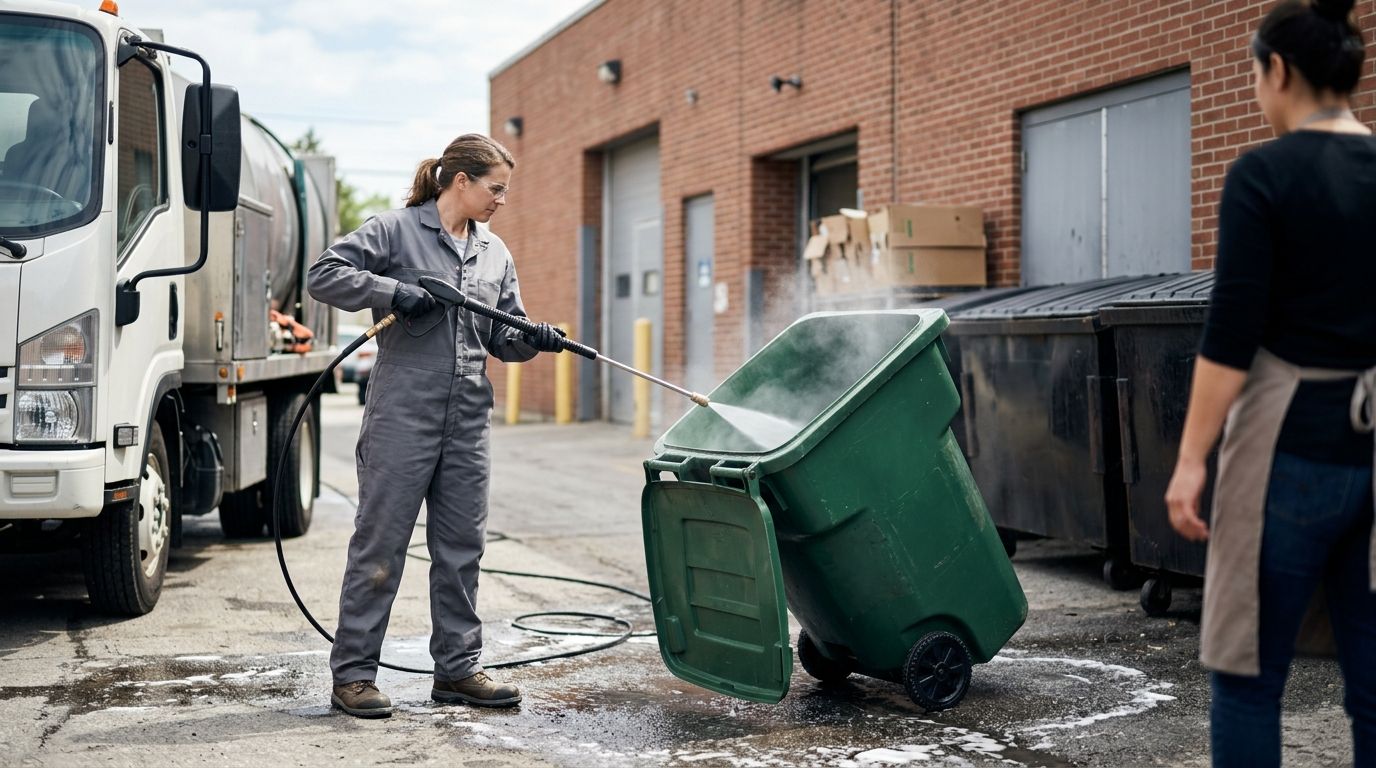
The best trash bin cleaning service for grocery stores and delis in the Tulsa area comes down to matching the container to the job. Best overall for single-location stores: a monthly bin cleaning subscription for back-of-house trash and recycling toters. Best for grease-heavy waste: dedicated dumpster cleaning built for produce rot and meat trim. Best budget stopgap between visits: DIY pressure washing on the cans customers never see. Lemon Fresh Bins runs the subscription side of that mix for Tulsa and Owasso stores heading into 2026.
- A monthly subscription wash is the best trash bin cleaning service for grocery stores with standard 96-gallon toters.
- Grease and produce-heavy dumpsters need dedicated food-service dumpster cleaning, not a residential bin cycle.
- DIY pressure washing helps between visits but cracks plastic toters if the pressure and angle are wrong.
- Multi-location grocery operators do better with a standardized recurring cleaning schedule than store-by-store scheduling.
- Lemon Fresh Bins serves Tulsa and Owasso trash and recycling toters on a set 2026 sanitizing schedule.
Why this matters
A deli or small grocery store throws away meat trim, dairy, produce peels, and packaging every single day, and all of it sits in the same trash and recycling toters that live at the loading dock. That waste mix breeds bacteria and fly larvae faster than a household bin ever will, especially in Oklahoma summers. A trash bin cleaning subscription built for recurring back-of-house waste solves the smell and pest problem before it reaches the sales floor.
The mistake most store managers make is treating every container the same. A standard toter and a shared grease dumpster need different equipment, different chemistry, and often different vendors entirely. Sorting that out up front saves a callback in July when the fly problem is already visible to customers.
“If a dumpster still smells after a subscription bin wash, the container needs food-service dumpster service, not a residential cleaning cycle.”
What makes the best trash bin cleaning service for grocery stores and delis
- Sanitizing power that beats grease and meat residue, not just a standing-water rinse
- Flexible frequency — weekly, biweekly, or monthly — matched to actual waste volume
- Odor control that holds between visits at a loading dock, not just on service day
- Equipment sized correctly for both 96-gallon toters and larger shared dumpsters
- Scheduling that works around pickup day and delivery truck traffic, not against it
- Food-safe process near receiving areas, with no harsh chemical residue left behind
Grocery and deli bin cleaning options at a glance
| Service | Best for | Standout feature | Key limitation |
|---|---|---|---|
| Lemon Fresh Bins subscription | Standard back-of-house toters | 5-step high-pressure sanitize and deodorize on a set schedule | Not sized for large shared dumpsters |
| One-time deep-clean visit | Grand openings, inspections | No commitment, resets a neglected bin fast | Odor and bacteria return within days without follow-up |
| Dedicated dumpster cleaning | Grease and produce-heavy dumpsters | Handles volume standard toter service can't | Scheduled separately from a bin subscription |
| DIY pressure washing | Budget stopgap between visits | Costs nothing but water and time | Cracks plastic if pressure or angle is wrong |
| Recurring commercial schedule | Multi-location grocery operators | One calendar across every store site | Overkill for a single independent deli |
1. Lemon Fresh Bins subscription: best trash bin cleaning service for grocery stores with standard toters
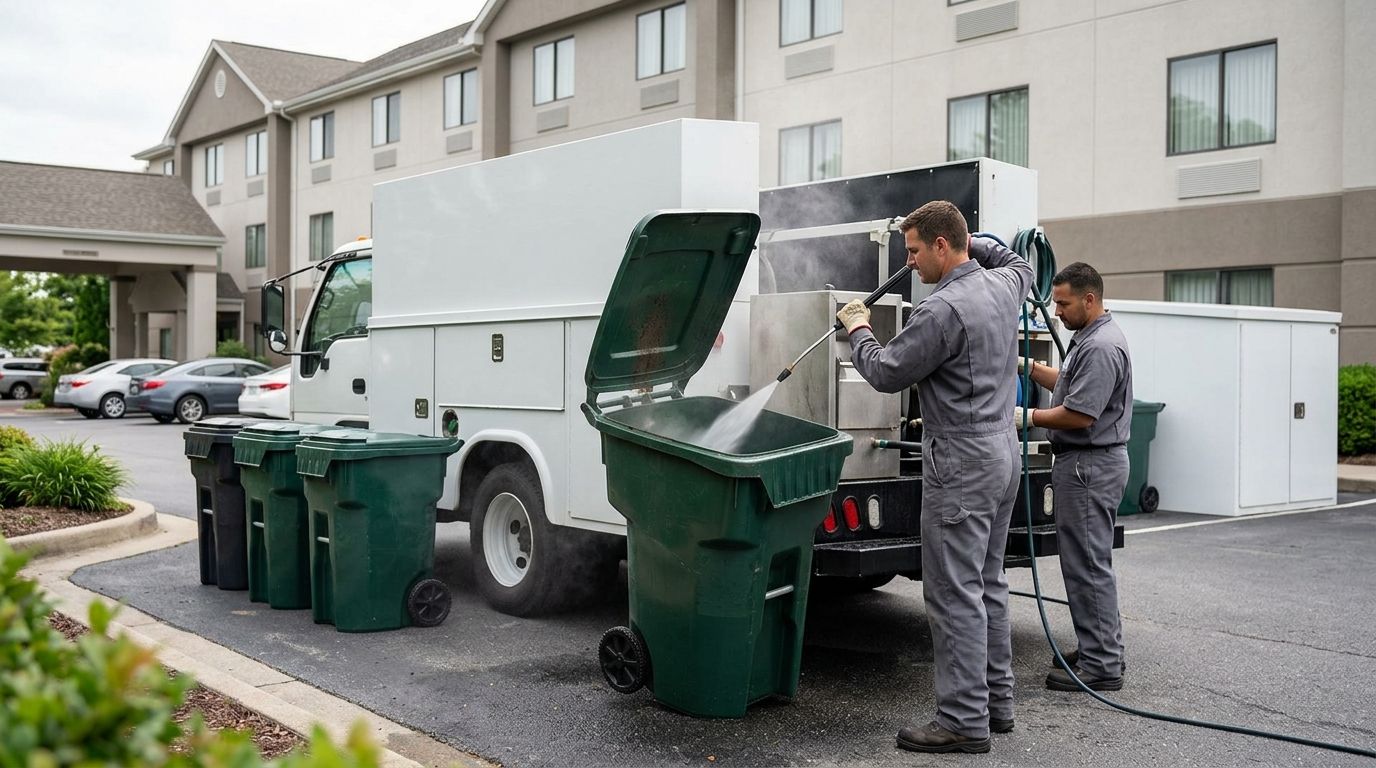
Lemon Fresh Bins runs a 5-step high-pressure sanitizing and deodorizing process on trash and recycling toters, scheduled on a repeating cadence rather than a one-off visit. For a deli or small grocery store, that means the same back-of-house bins that hold meat trim and produce scraps get cleaned before bacteria and odor build up, not after a customer or health inspector notices.
Lemon Fresh Bins pros:
- Set schedule removes cleaning from a manager's task list entirely
- High-pressure process reaches the lid hinge and rim where fly eggs collect, not just the interior walls
- Deodorizing step cuts loading-dock smell between service dates
- Built for repeat commercial food waste, not just a one-time reset
Lemon Fresh Bins cons:
- Sized for standard toters, not large shared grease dumpsters
- Fixed cadence — same-day or emergency single visits aren't the model
Best for: grocery stores and delis with standard 96-gallon trash and recycling toters that need a predictable sanitizing schedule.
Verdict: Buy.
2. One-time deep-clean service: best for grand openings and health inspections
A single-visit deep clean makes sense when a store is opening, a health inspection is on the calendar, or a bin has been neglected for months. It's a reset button, not an ongoing plan.
One-time deep-clean pros:
- No recurring commitment required
- Fast fix ahead of a scheduled inspection
- Clears a badly neglected bin in a single visit
One-time deep-clean cons:
- Odor and bacteria return within days for a high-turnover deli without a follow-up wash
- Doesn't solve a bin with a recurring maggot or grease problem
Best for: stores needing a one-time reset, not a recurring solution.
Verdict: Hold — use it once, then move to a schedule.
3. Dumpster cleaning for food waste containers: best for grease and produce-heavy dumpsters
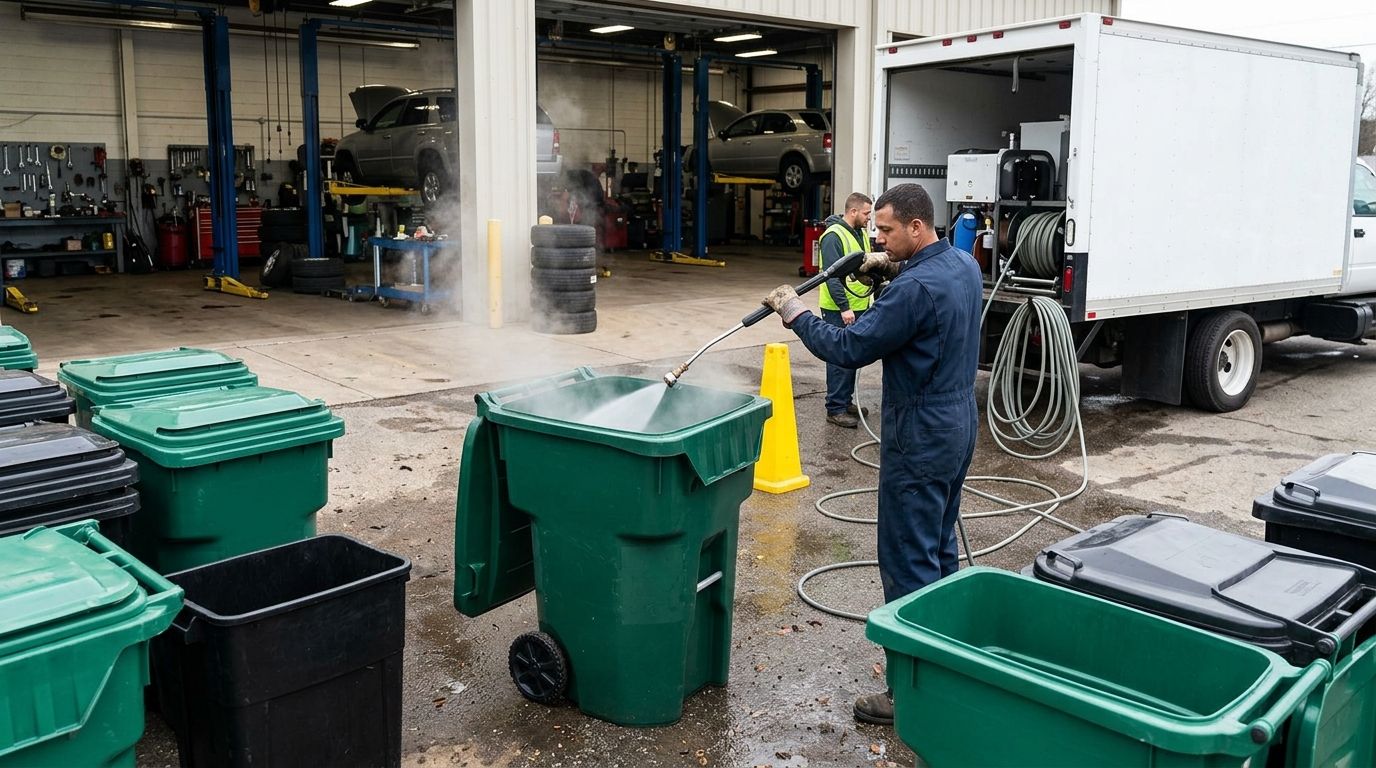
A shared dumpster handling meat trim, dairy waste, and produce rot needs heavier equipment than a standard toter cleaning visit. Dumpster cleaning built for restaurants and food trucks is designed for exactly this volume and grease load, and the same logic applies to a grocery deli counter's dumpster.
Dumpster cleaning pros:
- Handles grease and volume a toter subscription isn't built for
- Cuts pest pressure directly at the dumpster pad
- Keeps the loading dock area from becoming the smell source for the whole store
Dumpster cleaning cons:
- Runs on a separate schedule from a bin subscription
- Requires coordinating dumpster access with hauler pickup times
Best for: stores and delis with a shared dumpster handling wet food waste, not just packaged trash.
Verdict: Buy.
4. DIY pressure washing between professional visits: best budget stopgap
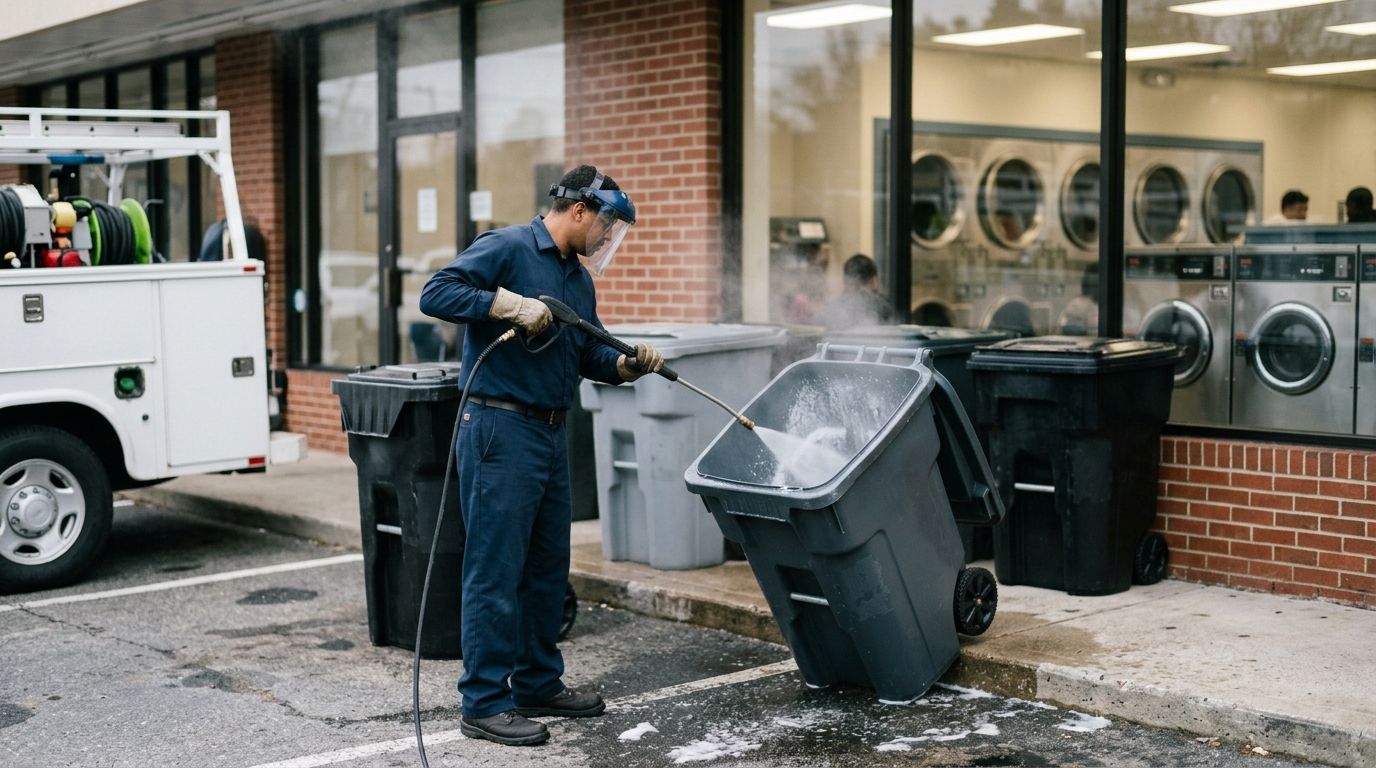
Hosing down a bin between scheduled service costs nothing beyond staff time, and it handles a fresh spill immediately. It's not a substitute for a full sanitizing cycle.
DIY pressure washing pros:
- Costs nothing beyond water and labor
- Handles a visible spill on a customer-facing bin right away
- Buys time between subscription visits
DIY pressure washing cons:
- Cracks plastic toters when pressure and angle aren't dialed in
- Misses the lid hinge and seam areas where bacteria and eggs collect
- No deodorizing step, so smell returns fast
Best for: small delis watching costs that still want the bin presentable between professional visits.
Verdict: Hold.
5. Recurring commercial cleaning schedule: best for multi-location grocery operators
A chain running several stores does better with one recurring cleaning schedule set up across every commercial property than with each store manager scheduling independently. It standardizes the sanitizing calendar to pickup days across the district.
Recurring schedule pros:
- Same sanitation standard applied at every location
- Easier for a district manager to audit compliance
- Removes per-store scheduling as a manual task
Recurring schedule cons:
- Takes upfront coordination across sites to set up
- Not worth the overhead for a single independent deli
Best for: operators managing multiple grocery or deli locations at once.
Verdict: Buy.
How this list was ranked
Each option was measured against the six criteria above: sanitizing power against grease and meat residue, frequency flexibility, odor control between visits, equipment sized to the container, scheduling that respects pickup day, and a food-safe process near receiving areas. No option scores well on all six — that's why the list splits by use case instead of naming one universal winner.
Which trash bin cleaning service should a grocery store or deli choose?
Start with a subscription for the standard toters that hold packaged trash and recycling. If the store runs a deli counter or produces meat and produce waste in volume, add dedicated dumpster cleaning on top of that subscription. Multi-location operators should set up one recurring schedule across every site rather than letting each store manage its own calendar. DIY pressure washing stays useful as a between-visit touch-up, never as the whole plan.
Get your Tulsa store's bins on a schedule
Set up recurring toter cleaning before summer fly season hits.
FAQ
What's the best trash bin cleaning service for grocery stores and delis?
A monthly subscription wash for standard back-of-house toters, paired with dedicated dumpster cleaning if the store handles grease or produce waste in volume. In 2026, that combination covers both the smell problem and the pest problem at the source.
How often should a grocery store or deli get its trash bins cleaned?
Monthly is standard for a typical deli-counter waste volume, with weekly or biweekly service for higher-turnover stores. Waste volume and Oklahoma summer heat both push the right frequency up, not down.
Is subscription bin cleaning better than a one-time deep clean for a deli?
Subscription service is better for ongoing operations because odor and bacteria return within days of a single visit without a follow-up. A one-time deep clean makes sense for a grand opening or an upcoming inspection, not as a standalone plan.
Can pressure washing my own bins replace a professional service?
No — DIY pressure washing handles a fresh spill but misses the lid hinge and seams where bacteria and fly eggs collect, and it can crack plastic toters if the pressure is too high. It works as a between-visit touch-up, not a replacement.
Does bin cleaning help with fly and maggot problems in a loading dock?
Yes — a high-pressure sanitizing process that reaches the lid rim and hinge removes the residue flies lay eggs in, which a standard interior rinse misses. Regular service prevents the buildup that draws flies in the first place.
What's different about cleaning a dumpster versus a standard trash bin?
A shared dumpster handling grease, meat trim, and produce rot needs heavier equipment and a different cleaning cadence than a standard 96-gallon toter. Most bin cleaning subscriptions are built for toters, not dumpster-scale volume.
How much does trash bin cleaning cost for a grocery store?
Cost depends on how many toters are serviced, the cleaning frequency, and whether dumpster cleaning is included alongside the subscription. Current plans and options are listed directly on the service provider's site rather than quoted as a flat rate.
Do grocery stores need a different cleaning method than houses?
The core process is similar — high-pressure sanitizing and deodorizing — but grocery and deli waste volume and grease content usually call for more frequent service than a typical household bin needs.
One last thing
Most of the smell complaint calls trace back to one spot nobody rinses: the underside of the lid hinge, where grease and food residue collect and fly eggs actually get laid. A quick interior rinse skips it every time, which is why a bin can look clean and still draw flies within a day. Any cleaning process that doesn't specifically target the hinge and rim is only solving half the problem.