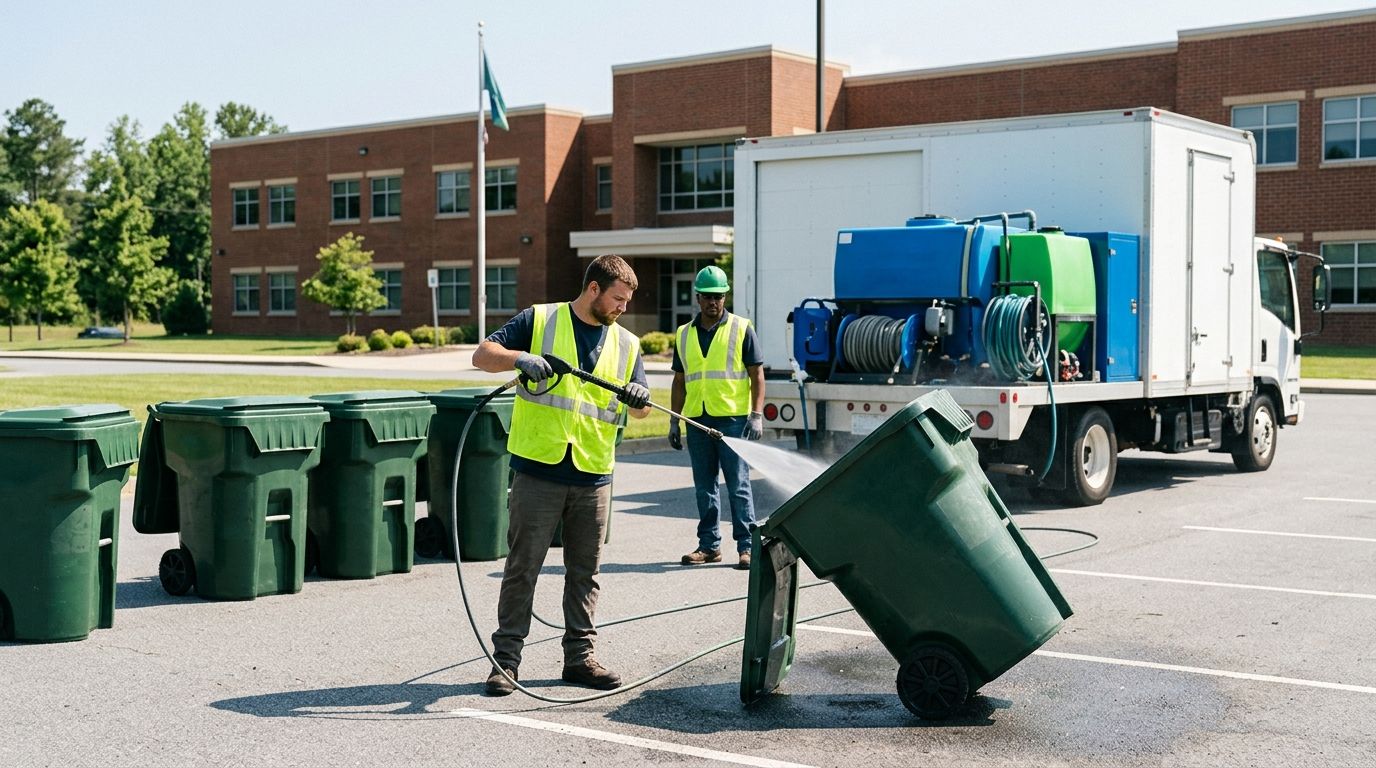
Tulsa-area school districts juggle cafeteria dumpsters, administrative office carts, gym and athletic-complex bins, and satellite campus trash all on one budget line, and most of it never gets cleaned until someone complains about the smell. The best trash bin cleaning service for school districts in 2026 depends on what kind of bin you're dealing with — a standard 96-gallon cart outside a district office needs a different fix than a cafeteria dumpster that's been baking in an Oklahoma parking lot since May.
- Lemon Fresh Bins wins for administrative buildings and single-campus carts using standard residential-style bins.
- Cafeteria dumpsters and compactors need a waste hauler add-on or a commercial pressure-washing contractor, not a residential-style subscription.
- Districts with existing custodial staff and pressure-washing equipment can handle standard carts in-house on a quarterly schedule.
- A pre-school-year deep clean across every campus resets bins before the August maggot and odor season hits.
Why this matters
A school cafeteria produces food waste every single weekday, and Oklahoma summers push outdoor bin temperatures well past the range where fly eggs hatch into maggots within a day or two. Facilities managers who skip bin sanitizing between school years inherit a smell problem — and sometimes a pest problem — the moment students walk back in.
The fix isn't complicated, but it does require matching the right service to the right bin. A Tulsa trash bin cleaning service built around high-pressure sanitizing handles standard carts well. Cafeteria dumpsters and industrial compactors are a different job entirely, usually bundled with the district's existing waste hauler.
What makes the best trash bin cleaning service for school districts
- Handles high-volume cafeteria waste without cross-contaminating recycling or compost streams
- Uses high-pressure, hot-water sanitizing instead of a garden-hose rinse that just moves grime around
- Works around the school calendar — summer break, winter break, and spring break are the windows, not mid-semester
- Clear scope between standard carts, dumpsters, and compactors, so no one oversells a service they can't deliver
- Local accountability — a crew you can call back if a bin still smells, not a national dispatch line
- Scheduling flexibility across multiple campuses on one district-wide plan
Trash bin cleaning options for school districts, at a glance
| Service type | Best for | Standout feature | Key limitation |
|---|---|---|---|
| Lemon Fresh Bins | Admin buildings and single-campus carts | 5-step high-pressure sanitizing subscription | Not built for dumpsters or compactors |
| Waste hauler add-on cleaning | Cafeteria dumpsters | Bundled into the existing hauling contract | Cleaning quality varies by hauler |
| Specialty commercial pressure-washing contractor | Multi-site district contracts | One vendor covers every campus | Higher coordination overhead |
| In-house custodial team | Districts with existing equipment | No new vendor contract required | Pulls staff off other duties |
| Pre-school-year deep-clean crew | District-wide reset before August | One-time blitz before the year starts | Doesn't cover mid-year buildup |
1. Lemon Fresh Bins: best for administrative buildings and single-campus carts
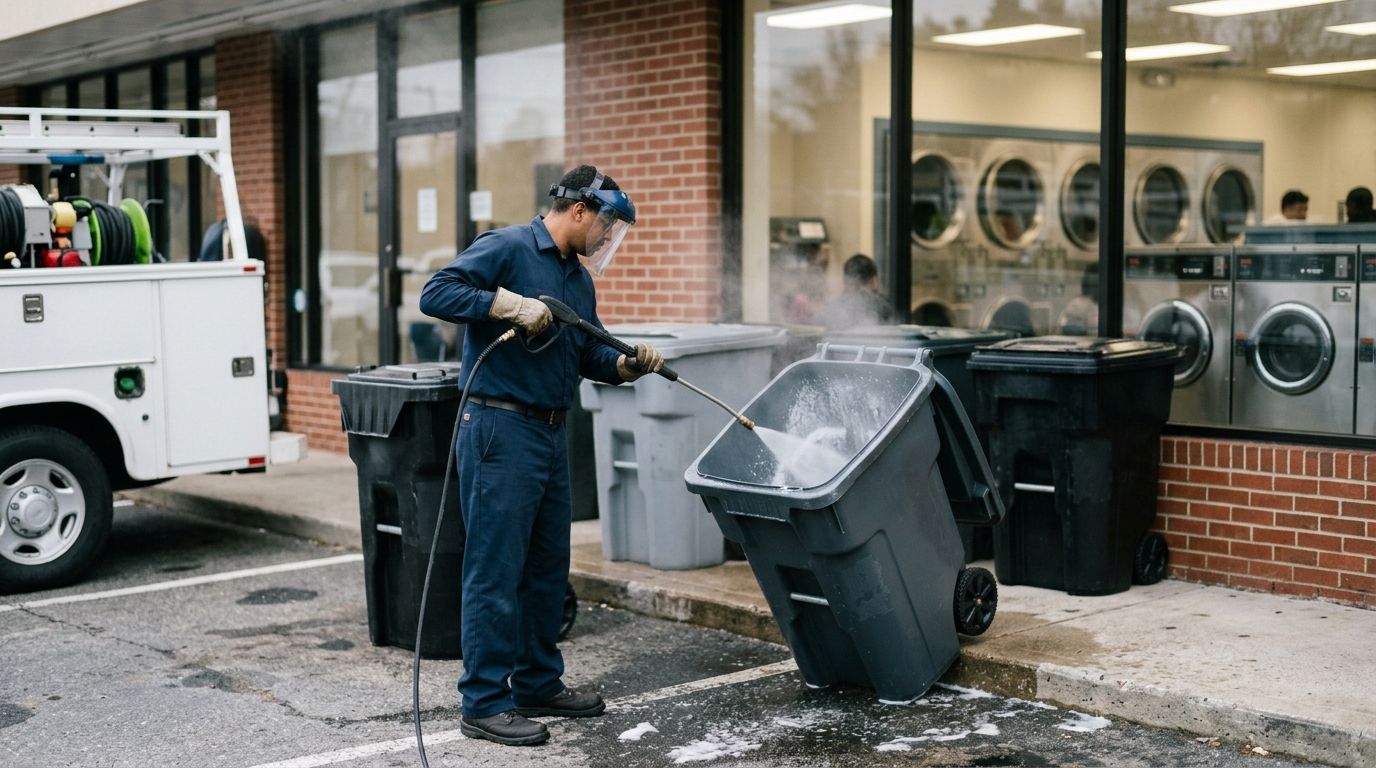
Lemon Fresh Bins runs a subscription-based, high-pressure sanitizing process built for standard trash carts — the kind of 32- to 96-gallon bins sitting outside a district administrative office, a bus barn, or a single elementary campus in Tulsa or Owasso. The same 5-step process it uses for homes and for segments like daycare centers applies to any facility running standard-cart trash service.
Lemon Fresh Bins pros:
- High-pressure sanitizing designed to kill maggots, germs, and odor at the source, not mask it
- Subscription model means bins get cleaned on a recurring schedule without someone having to remember to call
- Local Tulsa-area crew, not a subcontracted national franchise
Lemon Fresh Bins cons:
- Built for standard trash carts, not commercial dumpsters or compactors
- Not a fit for a district's cafeteria waste stream on its own
Lemon Fresh Bins verdict: Buy for administrative buildings, bus facilities, and any campus running standard curbside carts.
2. Waste hauler add-on cleaning: best for cafeteria dumpsters
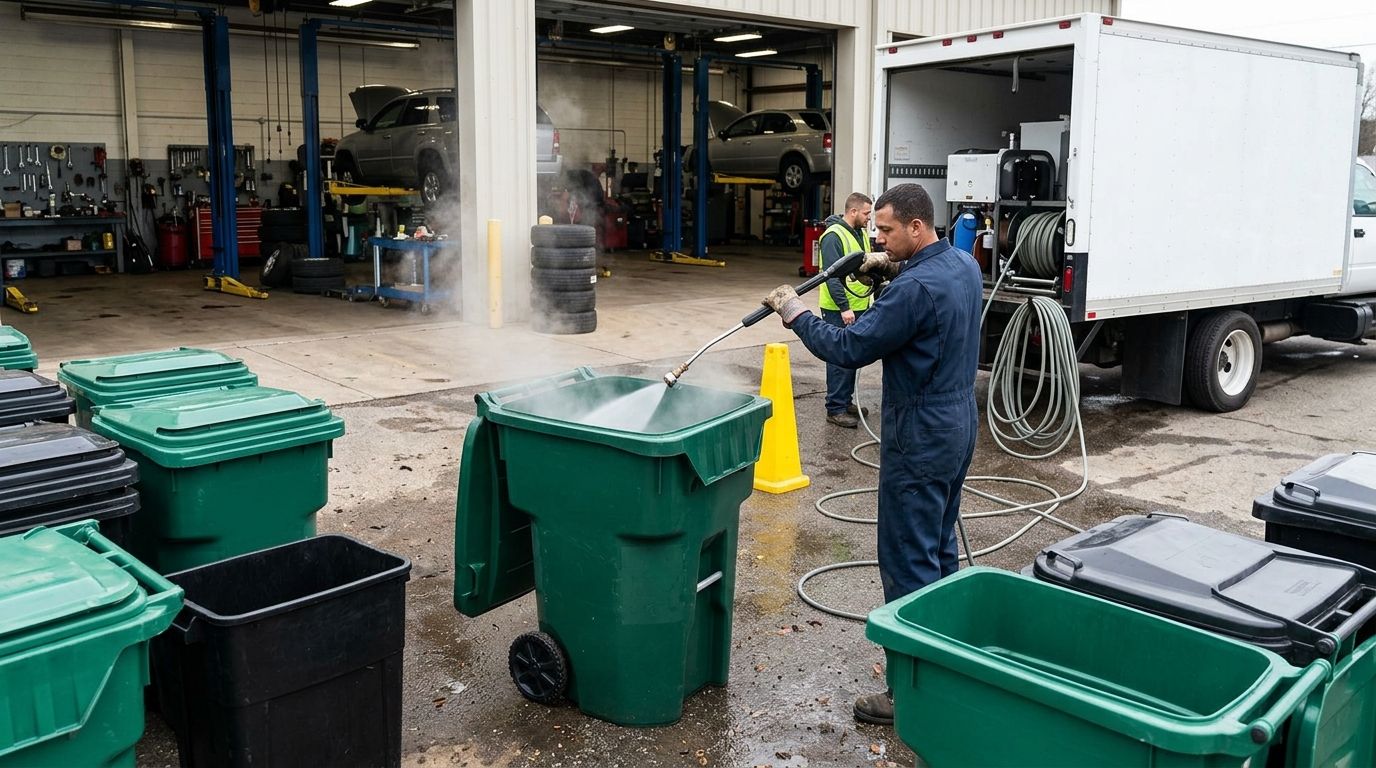
Most commercial waste haulers offer a cleaning add-on for the dumpsters and compactors they already service. It rides on the existing contract, so there's no new vendor relationship to manage for the cafeteria side of the operation.
Pros:
- One invoice, one point of contact for hauling and cleaning
- No extra truck access negotiation — the hauler is already on-site
Cons:
- Cleaning quality and frequency vary a lot by hauler; some subcontract it out
- Rarely covers standard carts at administrative buildings, only the dumpster fleet
Verdict: Hold — ask your current hauler what the add-on actually includes before assuming it solves the whole district.
3. Specialty commercial pressure-washing contractor: best for multi-site district contracts
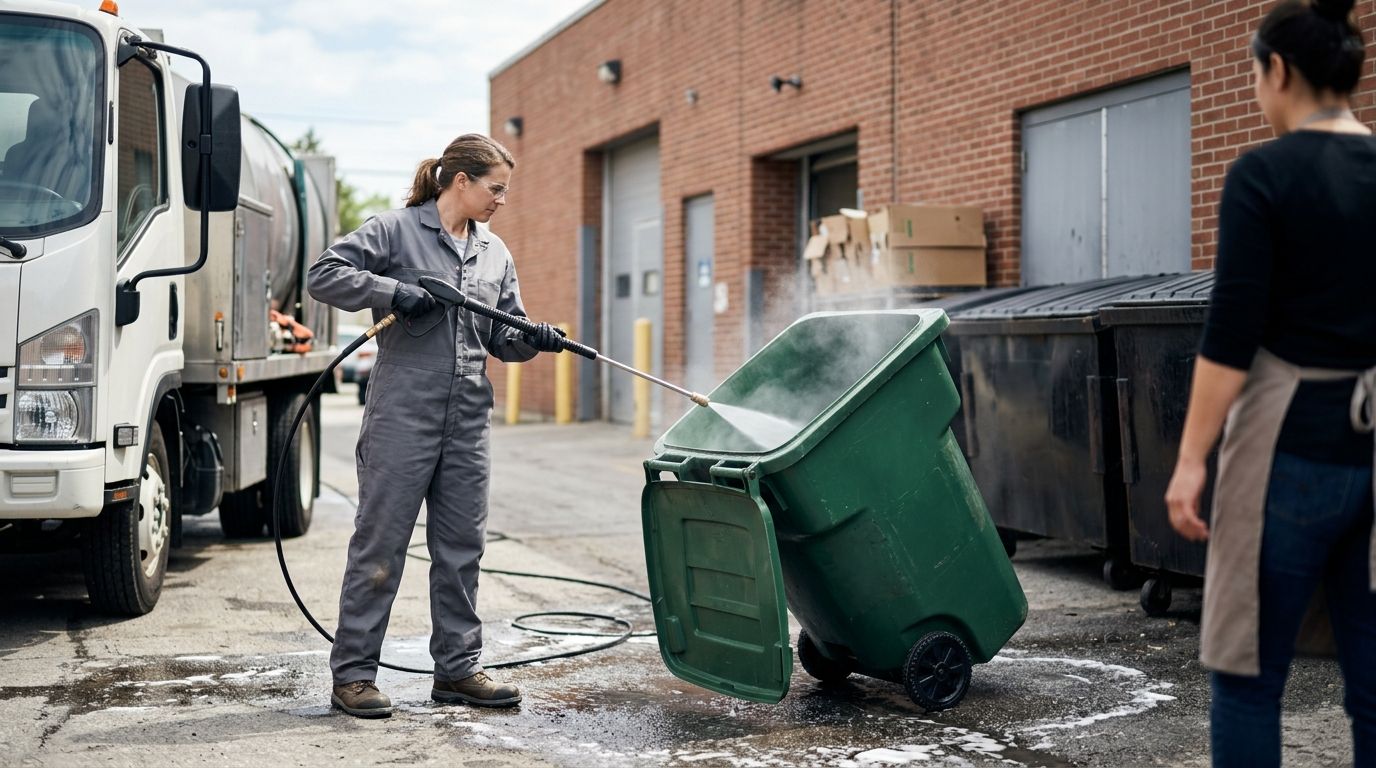
A commercial contractor that services multiple campuses under one district-wide agreement can standardize cleaning across every building type — carts, dumpsters, and compactors alike.
Pros:
- Single vendor for the entire district footprint
- Can bid a standardized frequency across all campuses
Cons:
- Coordinating access across a dozen or more campuses adds scheduling friction
- Larger contracts often mean longer lead times to get on the calendar
Verdict: Hold — worth pursuing for districts with 10+ campuses that want one contract, but overkill for a single school or admin building.
4. In-house custodial team: best for districts with existing equipment
Some districts already own pressure washers for building maintenance and can put custodial staff on bin cleaning duty during breaks.
Pros:
- No new vendor contract
- Staff already have building access and keys
Cons:
- Pulls maintenance staff off other work during already-tight break windows
- Inconsistent results without a repeatable sanitizing process
Verdict: Wait — fine as a stopgap, but it competes with every other summer maintenance project on the list.
5. Pre-school-year deep-clean crew: best for a district-wide reset before August
A one-time crew that hits every campus's bins right before the school year starts resets the smell and pest problem that built up over summer break, when bins often sit fuller and longer between pickups.
Pros:
- Clears out whatever built up over a slow summer pickup schedule
- Gives every campus a clean baseline on day one
Cons:
- Doesn't address buildup that happens mid-semester
- Needs to be paired with an ongoing schedule to actually matter
Verdict: Buy as a supplement, not a replacement for recurring service — see the cleaning frequency guide for how often carts actually need attention between deep cleans.
How we ranked these
Each option was measured against the six criteria above: cafeteria-volume capacity, sanitizing method, scheduling flexibility, calendar fit, scope clarity, and local accountability. No single service wins on every criterion — that's why the table above sorts by use case instead of a single leaderboard.
Which trash bin cleaning service should a school district choose?
For administrative buildings, bus barns, and single campuses running standard carts, Lemon Fresh Bins is the direct pick in 2026 — the subscription structure means the cleaning happens on a schedule instead of getting forgotten until a parent complains. For cafeteria dumpsters, start with your existing waste hauler's add-on service and get specific about frequency before assuming it's covered. Districts with a dozen or more campuses and a real facilities budget should also get a bid from a commercial contractor that can standardize across every site.
Get bins on a cleaning schedule
See subscription options built for recurring cart cleaning in Tulsa and Owasso.
FAQ
What's the best trash bin cleaning service for school districts in 2026?
For administrative buildings and single-campus carts, a subscription sanitizing service like Lemon Fresh Bins is the direct fit. Cafeteria dumpsters and compactors need a waste hauler add-on or a commercial contractor instead.
Can a residential-style bin cleaning service handle a school cafeteria dumpster?
No. Standard cart cleaning services are built for 32- to 96-gallon carts, not commercial dumpsters or compactors. Cafeteria waste needs a hauler add-on or a specialty commercial contractor.
How often should school trash bins be cleaned?
Standard carts benefit from a recurring monthly or quarterly schedule, with an extra deep clean before the school year starts. Cafeteria dumpsters typically need more frequent attention given the daily food waste volume.
Is in-house custodial pressure washing good enough for school bins?
It can work as a stopgap if a district already owns the equipment, but results are inconsistent without a repeatable sanitizing process and it pulls staff off other maintenance work.
Do recycling bins at schools need separate cleaning from trash bins?
Yes. Recycling bins should be cleaned separately from trash carts to avoid cross-contaminating recyclable material with food waste residue.
When is the best time of year to clean school trash bins?
Right before the school year starts in August is the priority window, since bins often sit fuller and longer during a slower summer pickup schedule. A second cleaning mid-year covers what builds up during the semester.
Does a subscription bin cleaning service work for multiple school buildings?
Yes, as long as each building uses standard carts rather than dumpsters. A recurring subscription can cover an administrative building, a bus barn, and a single campus on the same schedule.
One last thing
Cafeteria and administrative trash carts left outside during an Oklahoma summer break sit for weeks with almost no pickup activity, which is exactly the window where odor and fly problems set in before anyone notices. Scheduling a cart cleaning right before the first day back — not after the first complaint — is the cheapest fix a facilities team can make in 2026.