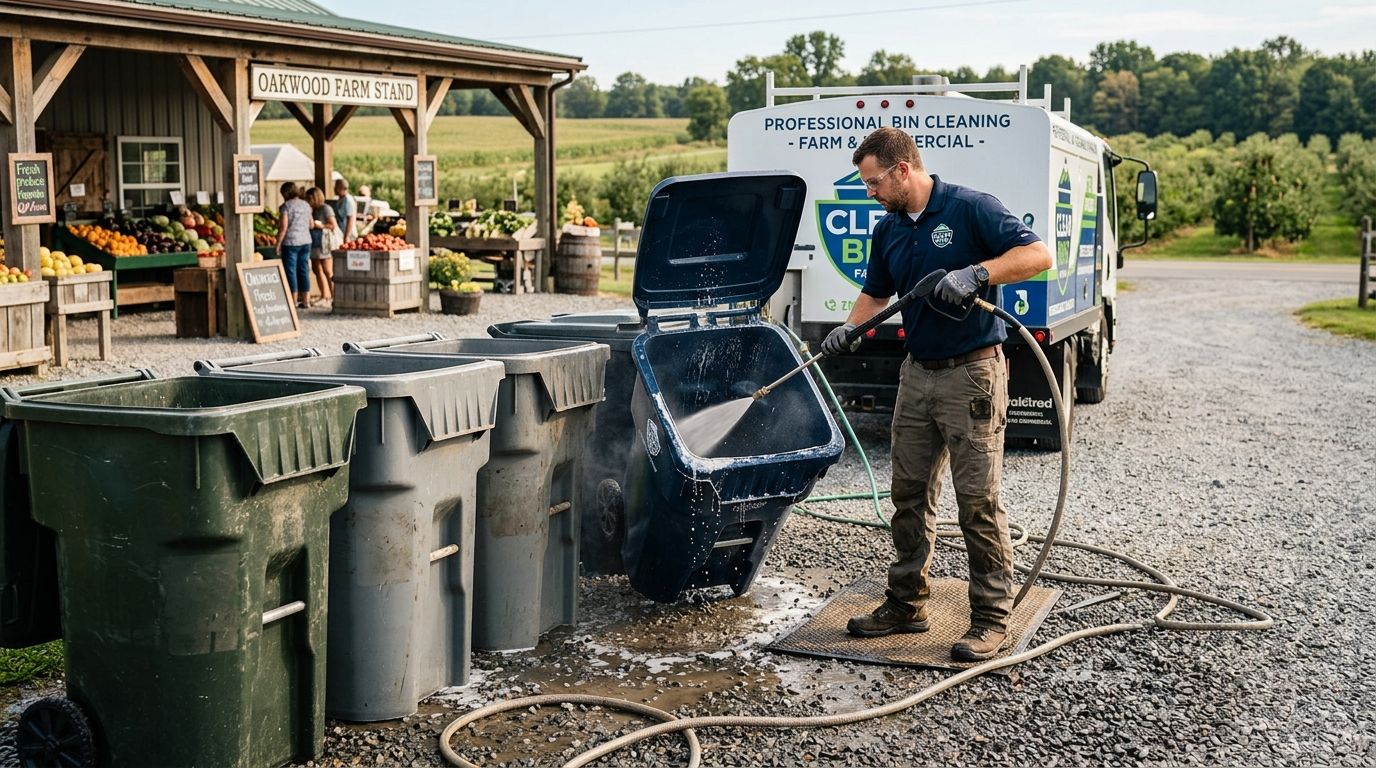
Farm stands and u-pick operations generate trash that regular households never see: melon rinds, corn husks, berry clamshells, and produce culls that turn a bin into a maggot nursery within 48 hours of hot Oklahoma sun. A weekly or biweekly professional cleaning schedule during harvest season is the only reliable way to keep customer-facing bins odor-free and pest-free at a Tulsa-area farm stand or u-pick farm.
- Trash bin cleaning for farm stands needs a tighter schedule than residential service because of produce waste volume during 2026 harvest months.
- Melon rinds and berry culls draw flies and maggots within 48 hours in Oklahoma summer heat — weekly cleaning beats monthly for peak season.
- Customer-facing bins at u-pick farms and roadside stands need visible cleanliness, not just odor control, since visitors see them up close.
- A high-pressure sanitizing cleaning removes sticky sugar residue and rotting produce film that a garden hose leaves behind.
- Lemon Fresh Bins runs a subscription model that scales up during growing season and back down in winter.
Why trash bin cleaning matters for farm stands and u-pick farms
A suburban household bin holds mostly dry waste between pickups. A farm stand bin holds wet, sugar-heavy produce scraps that ferment fast in July and August heat. That combination — moisture, sugar, and warmth — is exactly what maggots and flies need to establish inside a bin liner within two days, not two weeks.
U-pick farms have a second problem residential customers don't: the bin is part of the customer experience. Families walking berry rows past a stained, fly-swarmed trash can notice it, and it undercuts an otherwise clean farm visit. A roadside produce stand has the same exposure — the bin sits feet from the checkout table where people are buying food.
Oklahoma's growing season runs roughly April through October, with peak volume in June through September when tomatoes, melons, and sweet corn move fastest. That's also peak heat, which means faster decomposition and shorter windows before a bin smells before it's even a day past service.
Increase your cleaning frequency for harvest season
Most residential customers do fine on a monthly cadence. Farm stands and u-pick operations during peak harvest need something closer to every one to two weeks, then can drop back to monthly or seasonal once volume slows in fall.
- Track which weeks bring the heaviest produce waste (corn season, melon season, tomato culls) and schedule around them
- Match cleaning to your busiest sales days, not a fixed calendar date, since farm stand hours shift with harvest timing
- Read the guide on best frequency for scheduling a trash bin cleaning service before committing to a plan
- Add an extra cleaning after any weekend with a heavy u-pick crowd or a farmers market pop-up
- Drop back to a lighter schedule in the off-season instead of canceling service entirely
Separate produce waste from general landfill trash
Rotting produce is the single biggest driver of odor and pest problems at a farm stand. Culls, seconds, and unsellable produce belong in compost or a dedicated organics stream whenever your setup allows it, not mixed into the same bin as packaging and paper.
- Set up a separate compost bin or pile for culls, rinds, and vines away from the customer-facing trash can
- Keep a lidded, sealed bin specifically for produce scraps rather than an open bucket
- Rinse produce crates and bins before they touch the trash can, since juice residue is what actually feeds fly larvae
- Bag wet scraps before they go in the can if compost isn't an option that day
- Check the guide on keeping ants out of an outdoor trash can if sugar residue is drawing more than flies
Control flies and maggots before they establish
A single female fly can lay eggs that hatch into maggots within 24 hours in warm weather, and produce residue is a stronger attractant than typical household trash. Once maggots establish in the ridges of a bin lid or the base seams, a hose rinse won't remove them.
- Rinse the bin daily during peak season if it's holding any produce waste at all
- Keep the lid closed between customers even when the stand is actively selling
- Use a liner rated for wet waste and double-bag anything with juice or moisture
- Read how to get rid of maggots in a trash can for the manual removal steps if an infestation has already started
- The guide on how to stop flies from swarming your trash can covers deterrents that work between professional cleanings
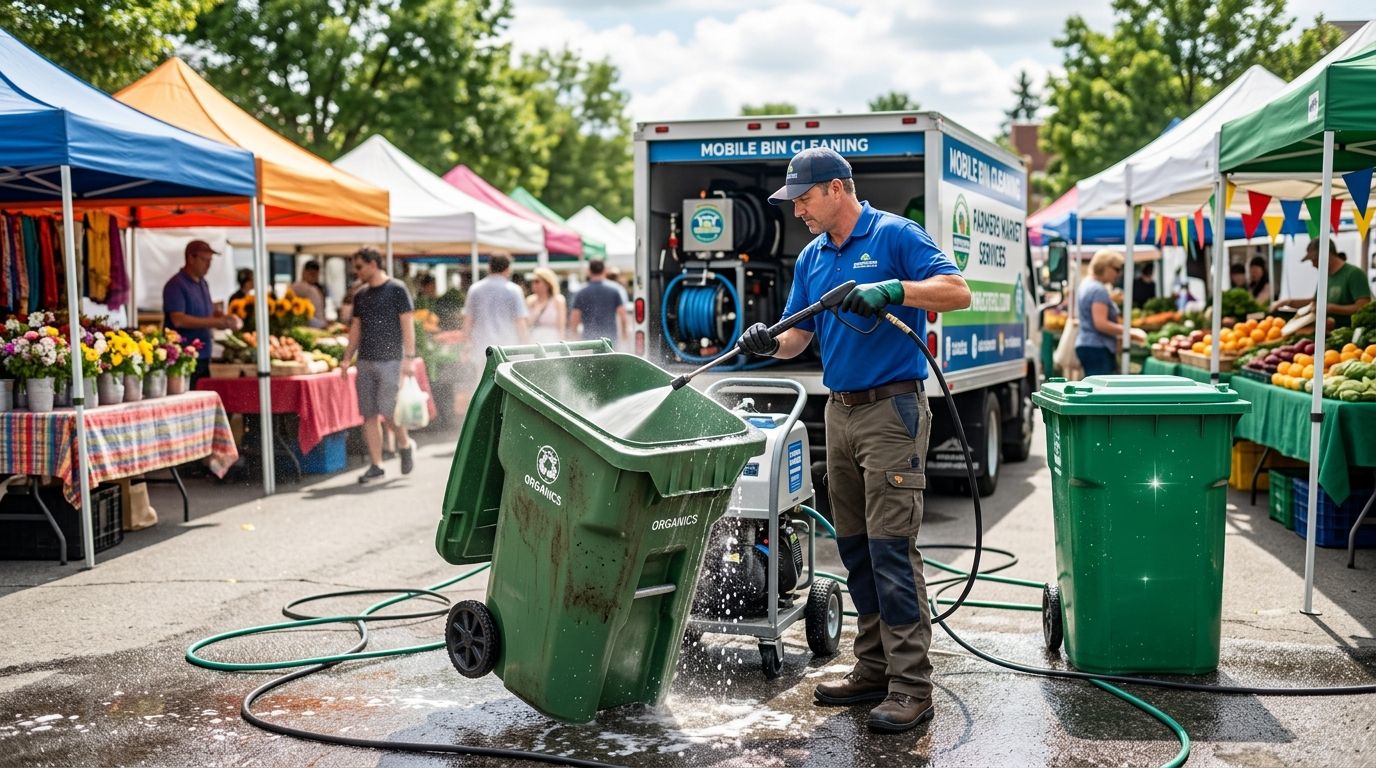
A garden hose moves surface debris but does nothing about the biofilm that builds on the inside walls after weeks of produce residue. High-pressure sanitizing hits the ridges, hinges, and base seams a hose can't reach, which is where maggot eggs actually survive.
Keep customer-facing bins visibly clean, not just odor-free
At a u-pick farm or roadside stand, the bin is on display all day. Odor control matters, but visible staining, dried juice streaks, and fly activity around the lid are what a visitor actually sees and remembers.
- Wipe down the outside of the bin and lid handle at least once during the sales day
- Position bins away from direct customer foot traffic where possible, but still visible enough to use
- Replace a cracked or heavily stained bin rather than trying to clean it back to presentable
- Check the guide on how to pressure wash a trash can without cracking the plastic before attempting DIY high-pressure cleaning on an older bin
Compare your options for farm stand bin cleaning
| Option | Best for | Key limitation |
|---|---|---|
| Garden hose rinse | Light-duty daily upkeep between visits | Doesn't remove sticky residue or maggot eggs in ridges |
| DIY pressure washer | Farms with existing equipment and time to run it weekly | Risk of cracking bin plastic if pressure or nozzle distance is wrong |
| One-time professional cleaning | A single reset before opening season or after an infestation | Doesn't address recurring harvest-season buildup |
| Weekly or biweekly subscription | Active farm stands and u-pick operations during peak season | Requires scheduling around market days and harvest timing |
For a single seasonal reset, the best one-time trash bin cleaning services option covers it. For ongoing harvest-season coverage, a recurring plan is the stronger fit.
Get your farm stand bins on a schedule
Weekly and biweekly cleaning for Tulsa-area farm stands and u-pick farms.
Common mistakes farm stands make with bin cleaning
- Treating farm stand bins like residential bins. A monthly household schedule leaves produce waste sitting long enough to draw flies and maggots during peak summer heat.
- Mixing compost-eligible produce with general trash. This doubles the organic load in one bin instead of splitting it, which speeds up decomposition and odor.
- Skipping cleaning in the off-season entirely. Bins left dirty over winter carry residue and odor into the next opening, even in cold weather.
- Ignoring the outside of the bin. Customers judge visible staining and lid grime even when the inside is sanitized.
- Using a garden hose as the only cleaning method. It moves loose debris but leaves the biofilm and residue that actually cause recurring odor and pest problems.
FAQ
How often should a farm stand clean its trash bins?
A farm stand should clean trash bins every one to two weeks during peak harvest season, roughly June through September in Oklahoma. Off-season, a monthly or seasonal schedule is usually enough.
Do u-pick farms need different bin cleaning than regular homes?
Yes. U-pick farms and farm stands generate more wet, sugar-heavy produce waste that decomposes faster than typical household trash, and their bins are customer-facing, so both odor and visible cleanliness matter more.
What causes maggots in farm stand trash bins?
Maggots come from fly eggs laid in rotting produce, rinds, and juice residue. Warm Oklahoma summers speed up the hatch time, so bins holding produce waste for more than a day or two are at higher risk.
Can I pressure wash my own farm stand trash bins?
You can, but incorrect nozzle distance or pressure setting can crack older plastic bins. A guide on pressure washing without cracking the plastic covers the safe technique if you're doing it yourself.
Should farm stand produce waste go in the trash or compost?
Produce culls, rinds, and vines should go into a separate compost bin or organics stream whenever possible. Keeping produce waste out of the general trash bin cuts down significantly on odor and fly activity.
How much does professional trash bin cleaning cost for a farm stand?
Pricing varies by frequency and number of bins. Check current plans and rates directly on the service page for an accurate quote.
Does bin cleaning help with wasps at a farm stand?
Sugar residue from produce juice attracts wasps as much as flies. Regular sanitizing removes the residue that draws them in the first place, which cuts down on wasp activity around the bin area.
What's the difference between a one-time cleaning and a subscription for a farm stand?
A one-time cleaning resets a bin before opening season or after an infestation. A subscription keeps up with recurring harvest-season waste and is the better fit for an active stand running through summer and fall.
One last thing
Most farm stand owners assume the smell is the problem to solve. It isn't. The residue left behind on the inside walls after produce waste sits for even a few hot days is what keeps drawing flies back, even after the bin looks empty. A rinse removes what you can see; a high-pressure sanitizing pass removes the film you can't, which is the actual reason the same bin keeps attracting pests week after week in 2026's growing season.