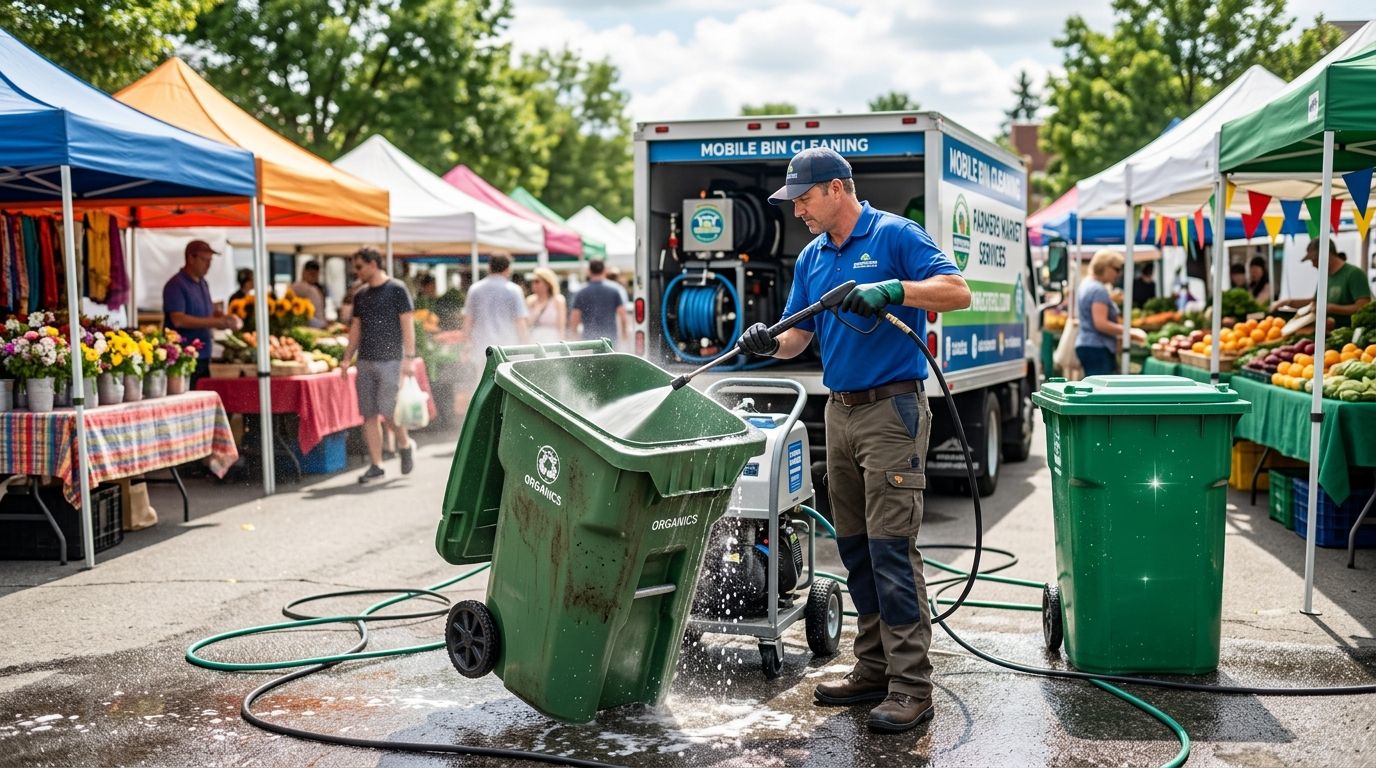
Farmers market vendor trash bin cleaning is a scheduled sanitizing service built around market-day waste — wilted produce, meat trim, dairy spoilage — that turns rank within hours once Oklahoma heat sets in. A vendor's bin doesn't get steady, spread-out trash like a household kitchen bin does; it takes a heavy hit every Saturday and then sits closed for six days straight, which is exactly the setup flies and bacteria need.
- Trash bin cleaning for farmers market vendors targets produce and meat waste that rots fast in Tulsa's May-through-October market heat.
- Weekly market dumps followed by six sealed days breed maggots faster than steady household trash ever does.
- Lemon Fresh Bins runs a 5-step pressure-wash and sanitize cycle built to kill maggots, germs, and odor between markets.
- DIY hosing works for light produce weeks; meat, fish, or dairy vendors need a tighter cleaning schedule during peak season.
Why bin cleaning matters for farmers market vendors
A vendor's trash bin cleaning routine has to match a very different waste cycle than a normal household one. You're not tossing a little kitchen scrap every day — you're dumping a full weekend's worth of unsold produce, bruised tomatoes, spoiled greens, and packaging in one shot, then sealing the lid until next Saturday.
That gap is the problem. Fly eggs laid on warm, wet food waste can hatch into maggots within about 24 hours in summer conditions, and a closed bin sitting in a Tulsa driveway in July holds heat like an oven. By the time trash pickup rolls around six days later, you're not dealing with a smell — you're dealing with an infestation.
Meat, fish, and dairy vendors have it worse. Protein waste breaks down faster than produce trim and pulls flies from farther away. If your stall handles any of that, your bin needs attention on a tighter clock than a produce-only vendor's does.
Step 1: Empty and rinse bins the same night as market day
Don't let a full weekend of produce trim sit overnight before you deal with it. The longer wet waste sits, the faster bacteria multiply and the harder the smell is to knock back later.
- Bag produce trim separately from cardboard and packaging
- Hose out the bin interior the same evening, even a quick rinse
- Prop the lid open for a few hours to air-dry before closing it
- Wipe down the rim where juice and moisture collect first
Step 2: Separate produce waste from packaging before it hits the bin
Wet food waste and dry cardboard mixed together turn into a soggy mess that holds odor and moisture against the bin walls longer than either would alone.
- Keep a second small bin or bag for cardboard and paper only
- Drain liquid from produce crates before dumping the trim
- Toss ice-melt water separately instead of into the same bin
- Break down boxes flat so they don't trap moisture underneath
Step 3: Hose down bins within 24 hours of a spoiled-produce spill
A burst tomato box or a leaking berry flat needs attention that day, not at your next scheduled cleaning. This is also where a professional cycle starts to make more sense than a garden hose.
- Rinse the spill area immediately with warm water if you can
- Spray a vinegar-water mix on the spot as a stopgap odor fix
- Note recurring spill spots so you can flag them for a deeper clean
- Book a sanitizing visit if the spill happened more than once that week
Step 4: Schedule a sanitizing cycle for peak market season
During May through October, when Tulsa market season runs hardest and heat accelerates spoilage, a once-a-month scrub isn't enough. Lemon Fresh Bins runs a 5-step high-pressure sanitizing and deodorizing cycle built for exactly this kind of recurring, heavy food waste.
- Compare a monthly plan against a quarterly one based on how often you vend
- Ask about scheduling around your specific pickup day, not a generic route day
- Flag meat, dairy, or fish waste up front so the cycle targets protein residue
- Keep a one-time deep clean in your back pocket for after a bad spoilage week
Step 5: Check bin seals and lids between markets
A cracked seal or a lid that doesn't sit flush lets odor out and flies in, which undoes any cleaning you just paid for or did yourself.
- Run a hand along the lid gasket to feel for gaps or dried-out rubber
- Check hinge points for grime buildup that keeps the lid from closing fully
- Replace a warped lid rather than fighting the seal every week
- Test the seal after a wash — some bins warp slightly from hot water
Step 6: Set a fly-prevention routine at your storage spot
Where you park the bin between markets matters as much as how often you clean it. A shaded spot with airflow slows bacterial growth compared to a bin baking against a sunny fence line.
- Move bins out of direct afternoon sun when possible
- Keep a lid weight or strap on bins in high-wind storage spots
- Store empty produce crates away from the bin, not stacked against it
- Check for gaps under the bin where maggots can drop and hide
Book a sanitizing cycle before peak market season
See plans built for weekly market waste in Tulsa and Owasso.
Comparison: cleaning options for market vendors
| Option | Best for | Key limitation |
|---|---|---|
| Garden hose rinse | Light produce weeks, no meat or dairy waste | Doesn't reach dried residue or kill maggot eggs |
| Coin-op car wash bay | A one-off deep rinse between markets | Not built for sanitizing, no deodorizing step |
| Professional monthly subscription | Weekly vendors selling produce, meat, or dairy | Requires scheduling around your market day |
| One-time deep clean | Post-infestation cleanup or end-of-season reset | Doesn't prevent buildup from the next market cycle |
Verdict: a weekly-vending produce or protein seller needs a recurring professional cycle, not a hose, once market season hits full swing.
Common mistakes farmers market vendors make
- Letting spoiled produce sit bagged inside the bin until next Saturday instead of dealing with it the same night
- Mixing wet food trim with cardboard boxes, which traps moisture and turns a smell problem into a mold problem
- Waiting for a fly problem to show up before scheduling any cleaning, instead of getting ahead of the May-through-October season
- Storing food-safe totes and coolers right next to a dirty bin, which cross-contaminates gear you use at the next market
- Treating one spring clean as good for the whole season, when protein and produce waste both accelerate once summer heat arrives
FAQ
How often should farmers market vendors clean their trash bins?
Produce-only vendors during peak season should aim for at least monthly cleaning, and vendors handling meat, fish, or dairy should go tighter, closer to every two to three weeks. During Tulsa's slower fall and winter market months, a quarterly schedule is usually enough.
What attracts maggots to a vendor's trash bin faster than household trash?
Wet produce trim and protein waste sitting in a sealed bin for six days between weekly markets creates warm, moist conditions that fly eggs need to hatch. A closed bin in summer heat can go from egg to maggot in about a day.
Can I just hose down my bin after market day?
A hose rinse helps with light produce weeks but doesn't reach dried residue in the seams or kill anything already laid in the bin. It's a stopgap, not a substitute for a full sanitizing cycle.
Does Lemon Fresh Bins clean bins used for produce and meat waste?
Yes, the 5-step high-pressure sanitizing and deodorizing process is built to handle heavy organic waste, including produce trim, meat scraps, and dairy spoilage that a household kitchen bin rarely sees at that volume.
What's the best time of year to start a cleaning schedule for market season?
Set your schedule before the season ramps up, ideally as temperatures climb into the 80s in late spring. Waiting until you already smell a problem means the bin has likely already had a maggot cycle.
Is bin cleaning necessary if I already use trash bags?
Bags reduce direct contact but don't stop leaks, punctures, or residue that builds up on the bin walls and rim over a season of heavy use. The bin itself still needs a separate cleaning schedule.
Do meat or fish vendors need a different schedule than produce vendors?
Yes. Protein waste breaks down and attracts flies faster than produce trim, so meat, fish, and dairy vendors should schedule cleanings more frequently than a produce-only stall during the same market season.
What should I do if maggots keep coming back even after cleaning?
Recurring maggots usually mean the cleaning cycle isn't frequent enough for your waste volume, or the bin's seal is letting flies back in between visits. Tightening the schedule and checking the lid gasket usually solves it.
One last thing
The detail most vendors miss: it's not the market-day dump that causes the infestation, it's the six quiet days after. A bin that looks fine Saturday night can have a maggot problem by the following Thursday if the waste inside sat warm and sealed the whole time. Build your cleaning schedule around that gap, not around how the bin looks when you close the lid.