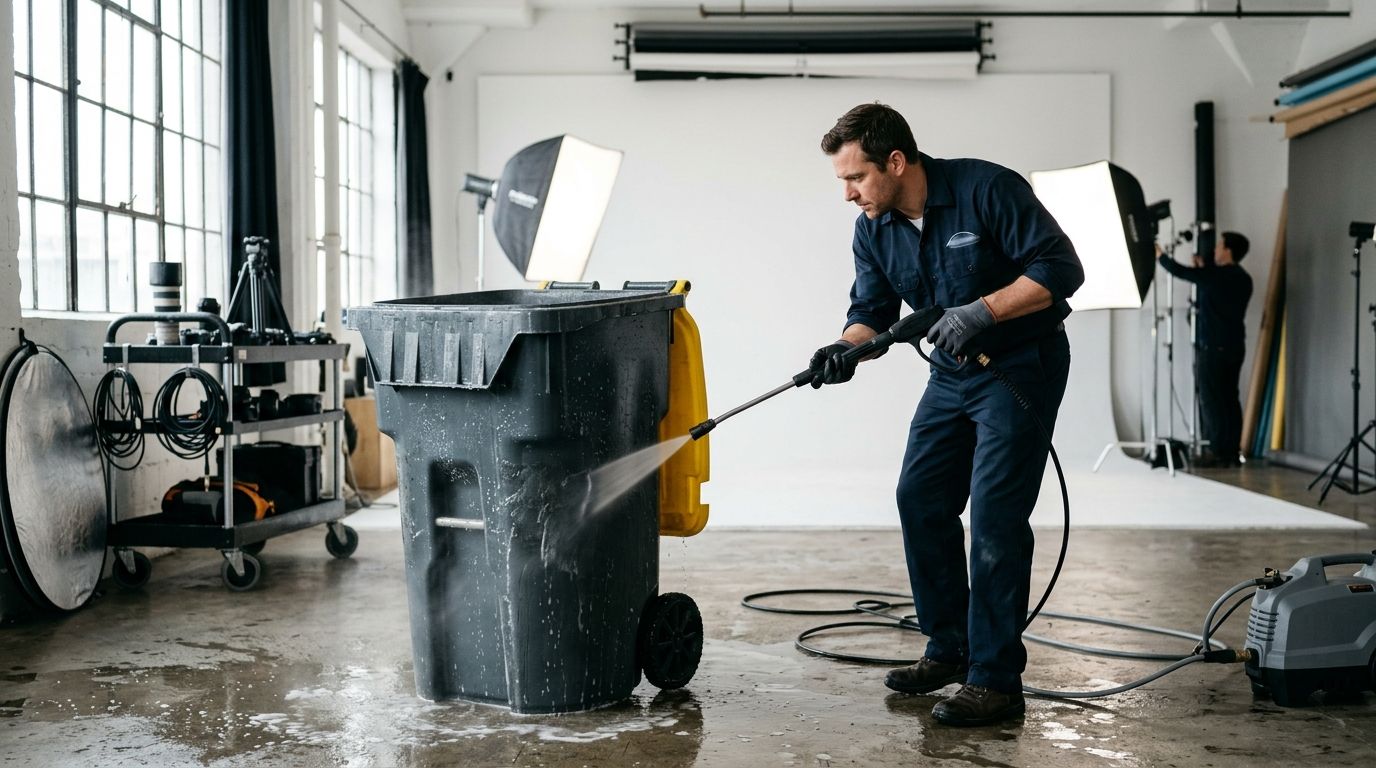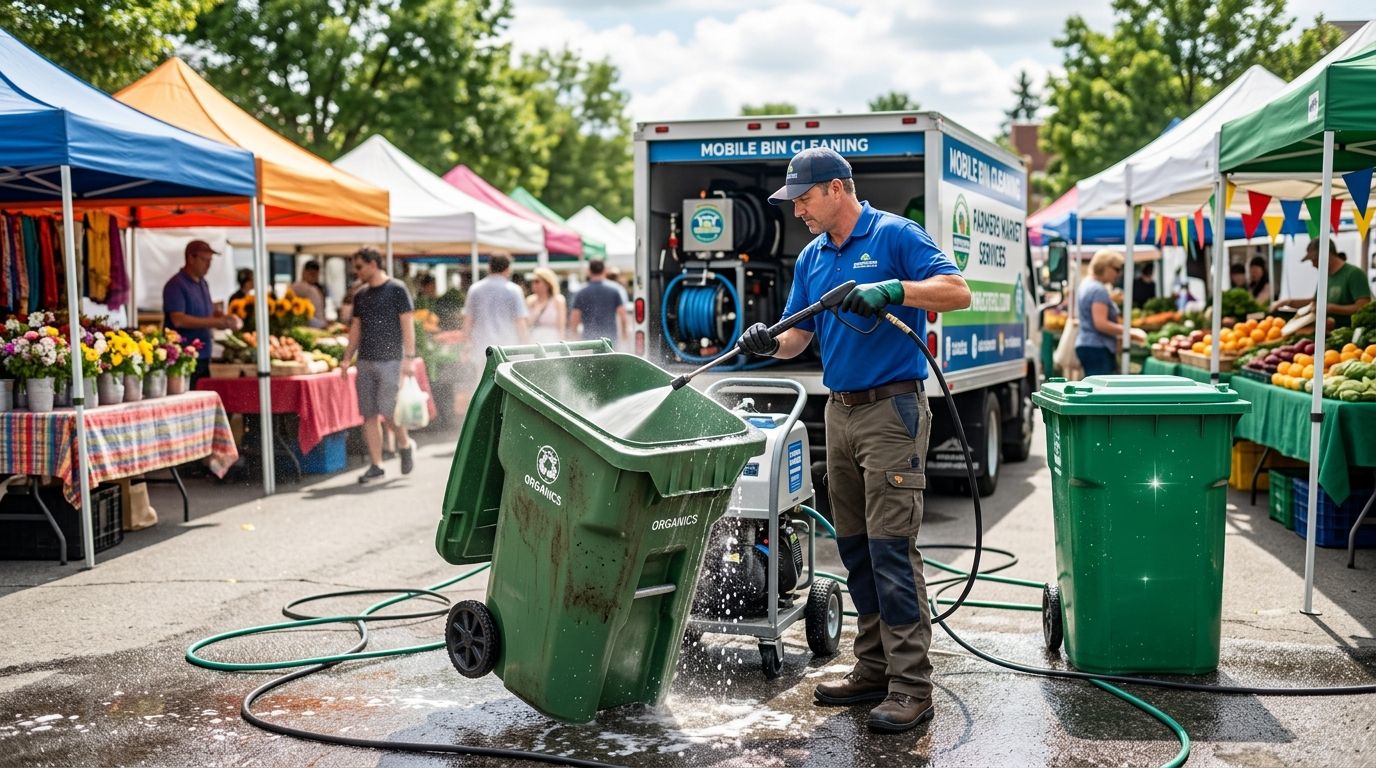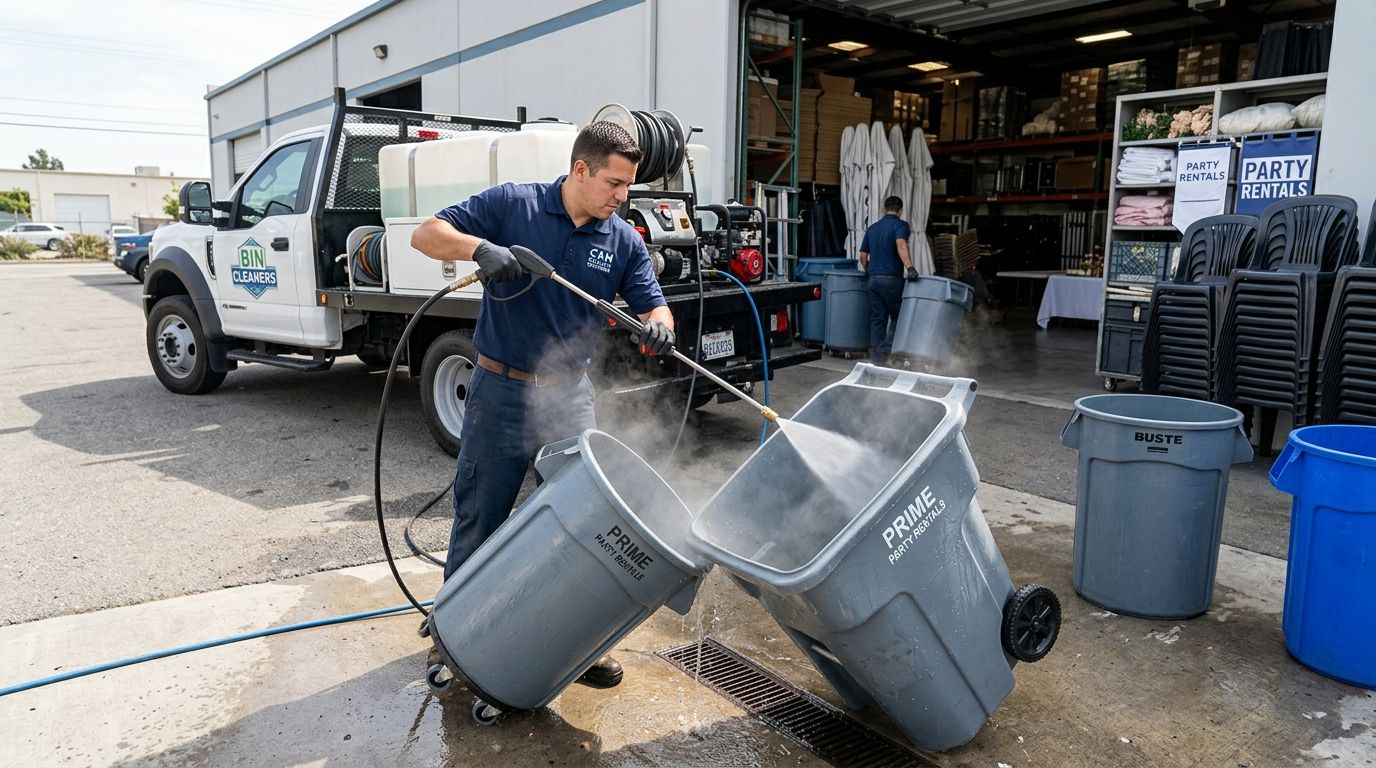
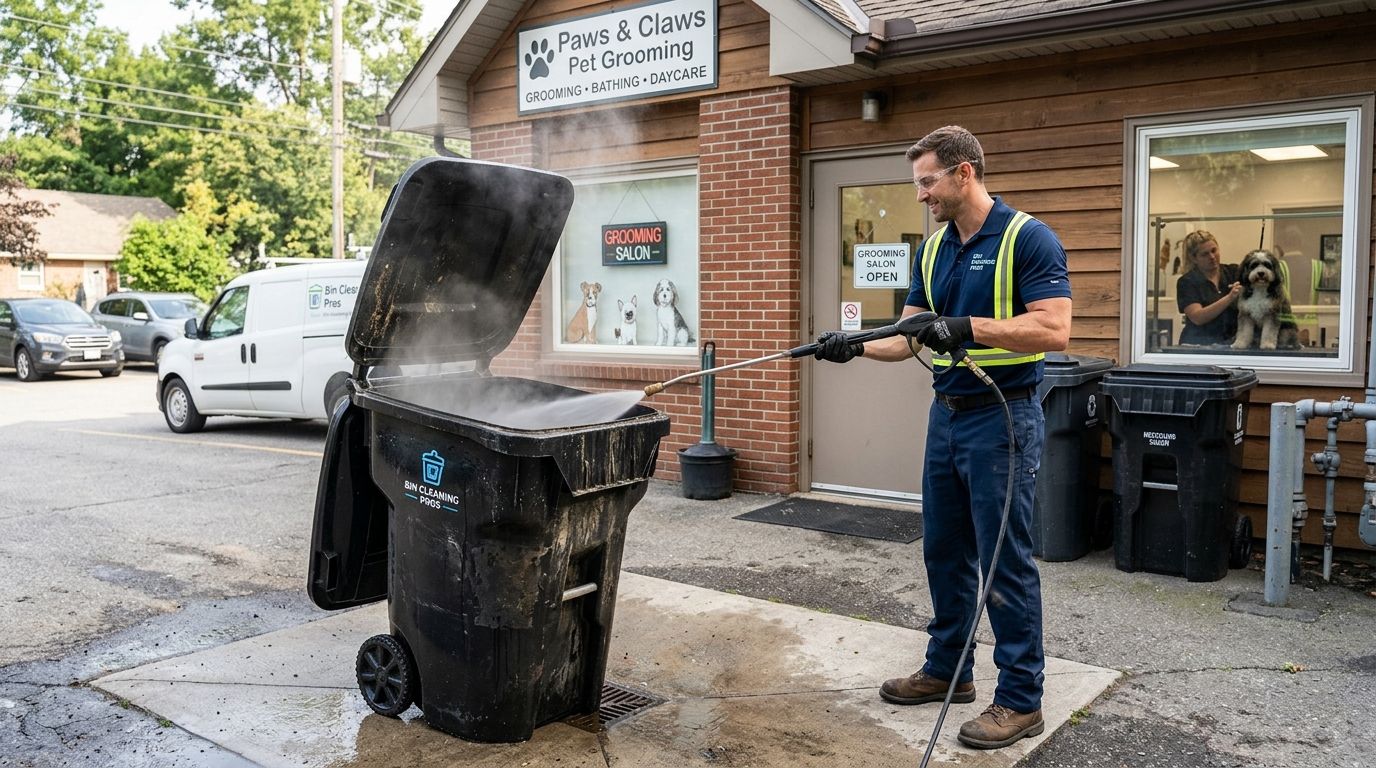
Trash bin cleaning for pet grooming businesses means a scheduled, high-pressure sanitizing service built around the specific waste a groomer generates — clumped fur, flea and tick residue, dog waste, and shampoo runoff — with the aim of stopping odor and pest complaints before they reach the lobby. A residential bin gets emptied once a week and holds food scraps. A grooming shop bin fills daily with wet fur, hair clippings soaked in product, and the occasional accident from a nervous client, which means it needs a different cleaning rhythm entirely.
- Trash bin cleaning for pet grooming businesses works best on a weekly or biweekly cadence, not the monthly default that fits a house.
- Wet fur and pet waste create maggot and fly conditions faster than dry household trash — daily rinsing between visits matters.
- Lemon Fresh Bins uses a 5-step high-pressure sanitizing and deodorizing process backed by a guarantee: kills maggots, germs, and odors, or it's free.
- Storefront visibility raises the stakes in 2026 — a smelling bin by the door affects walk-in traffic, not just employee comfort.
Why trash bin cleaning matters for pet grooming businesses
A grooming shop's trash bin is a mixed bin: fur, nail clippings, used wipes, spent flea and tick treatment packaging, and sometimes soiled bedding, all going into the same container multiple times a day. That combination breaks down faster than typical household garbage and holds odor in the plastic longer, especially once summer heat hits Tulsa.
Client-facing businesses have a second problem residential customers don't: the bin often sits near the entrance or the parking lot, where every walk-in smells it before they smell the shampoo inside. Vet clinics and animal hospitals deal with a similar mix of biological waste and foot traffic, and the same logic applies to a grooming storefront in 2026: odor control is part of the customer experience, not a back-of-house chore.
Maggots are the real trigger for most calls. Flies lay eggs on exposed organic waste quickly in warm weather, and a bin that already smells like wet fur and protein residue is an easy target. Once eggs hatch inside the plastic ridges of a bin, spraying the surface with a hose does not reach them — the larvae sit in the seams.
The step-by-step approach for grooming shop bins
Separate grooming waste from office and retail trash
Most shops run one bin for everything, which means fur and wet waste contaminate paper, packaging, and retail trash that would otherwise stay dry and low-odor.
- Run a dedicated bin for fur and pet waste near the grooming stations
- Keep a second bin for office paper, packaging, and retail trash
- Line the pet-waste bin with a heavier-gauge bag rated for wet contents
- Empty the pet-waste bin at least once a day during business hours
- Rinse the pet-waste bin's interior at close if it's visibly wet
Rinse and dry bins daily during business hours
A quick rinse won't replace a full sanitizing cycle, but it slows bacterial growth between deeper cleanings.
- Hose down the interior at close of business, not just the lid
- Flip the bin upside down or prop it open to air-dry overnight
- Wipe the rim and hinge, where fur and residue collect fastest
- Check the drain holes on outdoor bins so standing water doesn't sit inside
- Skip air fresheners as a substitute — they mask odor, they don't remove the source
Schedule a deep sanitizing clean on a fixed cadence
Daily rinsing handles surface residue. It does not remove biofilm, embedded odor, or eggs already laid in the plastic ridges — that needs pressure.
- Book a professional cleaning weekly if the shop grooms 15 or more dogs a day
- Move to biweekly for lower-volume shops or slower seasons
- Confirm the process covers both the interior and the lid hinge area
- Ask whether the service uses high-pressure water, not a hose-and-soap wipe
- Check that the cleaner deodorizes after sanitizing, not instead of it
Lemon Fresh Bins runs a 5-step high-pressure sanitizing and deodorizing process built for recurring commercial buildup, and it's the point where most grooming shops in Tulsa stop doing this manually and put it on a subscription. Shops handling it in-house usually stall here — a garden hose doesn't generate the pressure to strip embedded fur and residue from textured plastic.
Deodorize between professional visits
Between scheduled cleanings, odor control keeps the storefront from smelling like the trash area even when the bin is technically clean.
- Use an enzyme-based deodorizer, not a perfume spray, to break down organic residue
- Keep lids closed except during active disposal
- Position outdoor bins away from the entrance and any air intake vents
- Swap liners more often in warm months when odor builds faster
- Note any lingering smell after a rinse — it usually means the last clean missed the seams
For product-level options between visits, the rundown of trash can deodorizers between professional cleanings covers what actually holds up in a high-traffic bin.
Train staff on maggot and pest prevention basics
Front-desk and grooming staff notice a problem first, but only if they know what to look for.
- Show new hires what early maggot activity looks like around the rim and lid
- Set a house rule: any bag showing a tear gets double-bagged immediately
- Assign one person per shift to check the bin area, not "whoever notices"
- Keep a short log of smells or pest sightings so patterns show up early
Track cleaning dates for inspections and client trust
A grooming business handling animal waste on-site benefits from a simple paper trail, especially if a landlord or inspector asks about sanitation practices.
- Keep a basic log with the date of each professional cleaning in 2026
- Note which bin was serviced if the shop runs more than one
- Save any service confirmation as backup documentation
- Share the schedule with staff so nobody assumes someone else handled it
Comparing your options
| Option | Best for | Key limitation |
|---|---|---|
| Daily hose rinse (in-house) | Shops grooming fewer than 10 dogs a day | Doesn't reach embedded fur or eggs already laid in the seams |
| DIY pressure washer rental | A one-time deep clean before an inspection | Inconsistent results; time cost falls on grooming staff |
| Recurring professional subscription (Lemon Fresh Bins) | Shops with daily wet waste and storefront visibility | Runs on a set schedule rather than on-demand calls |
Lemon Fresh Bins is best for a Tulsa-area grooming shop that generates wet pet waste daily and has a bin customers can see or smell from the entrance. The pattern mirrors what works for hair salons and spas — another storefront business producing wet organic waste all day. Both move from occasional hose rinses to a fixed subscription once volume passes a point where manual cleaning stops keeping up.
If you're deciding between weekly, biweekly, and monthly, the breakdown of best frequency for scheduling a trash bin cleaning service walks through how waste type changes the answer.
Book grooming shop bin service
Recurring high-pressure sanitizing and deodorizing for Tulsa-area businesses.
Common mistakes pet grooming businesses make
- Treating the bin like a residential can. A household schedule under-services a bin that fills daily with wet fur and pet waste.
- Masking odor instead of removing it. Sprays and gel clips cover a smell already set into the plastic; they don't remove the source.
- Skipping the hinge and lid seal. Most odor complaints trace back to buildup in the hinge, not the flat interior surface.
- Running one bin for everything. Mixing dry retail trash with wet grooming waste speeds up odor in both.
- Waiting for a client complaint before booking. By the time someone mentions the smell, the bin has been off-cycle for weeks.
“If the smell comes back within 48 hours of a rinse, the problem is in the seams, not the surface.”
FAQ
How often should a pet grooming business clean its trash bins?
Shops grooming 15 or more dogs a day should schedule weekly professional cleaning; lower-volume shops can usually run biweekly. Daily rinsing between visits helps but doesn't replace a sanitizing pass.
What causes maggots in a grooming shop's trash bin?
Wet fur and organic residue give flies an easy place to lay eggs, and warm weather speeds up hatching. Once eggs settle into the seams of a bin, a surface wipe won't remove them.
Is a garden hose enough to clean a commercial grooming bin?
No. A hose removes loose debris but doesn't generate the pressure to strip embedded fur and biofilm from textured plastic. High-pressure sanitizing reaches ridges and hinge areas a hose skips.
Should grooming shops separate pet waste from office trash?
Yes. A dedicated bin for fur and pet waste keeps moisture and odor out of drier office and retail trash, and it makes the cleaning schedule easier to manage.
Does trash bin odor affect walk-in business at a grooming shop?
A bin near the entrance or parking lot is often the first thing a walk-in client smells. Storefront businesses have more riding on odor control than a back-of-house operation does.
What's the difference between deodorizing and sanitizing a trash bin?
Deodorizing reduces smell temporarily, usually with an enzyme product. Sanitizing removes the bacteria and residue causing the smell. Grooming shops need sanitizing on a schedule and deodorizing in between.
Can Lemon Fresh Bins clean bins for a grooming business in Tulsa?
Lemon Fresh Bins runs a 5-step high-pressure sanitizing and deodorizing process built for recurring buildup, backed by a guarantee that it kills maggots, germs, and odors or it's free.
What should a grooming shop check before hiring a bin cleaning service in 2026?
Confirm the process covers the lid hinge and interior ridges rather than just a rinse, and confirm deodorizing happens after sanitizing instead of replacing it.
One last thing
Most grooming shops assume the smell comes from the grooming area itself — the shampoo, the wet dogs, the dryers. It's usually the bin by the back door, because wet fur and organic residue hold odor in plastic far longer than a quick hose-down suggests. Fix the bin before spending 2026 budget re-testing shampoo brands or buying air purifiers for the floor.